




Technology trends
VR and AR in the company: How renting instead of buying reduces your costs and increases flexibility
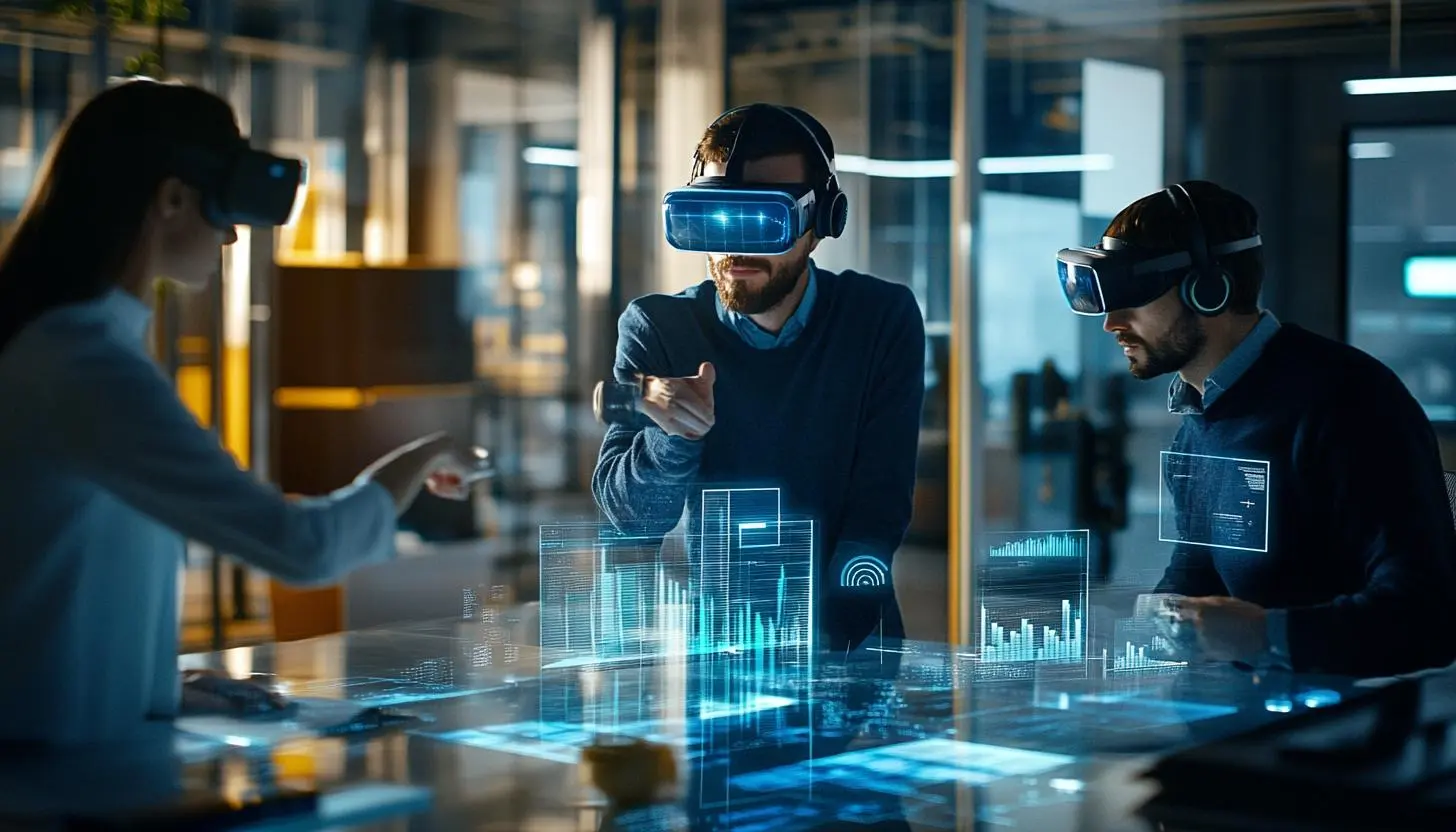
The future of VR and AR: how virtual reality and augmented reality are changing our everyday lives
Virtual reality (VR) and augmented reality (AR) are no longer just gimmicks for technology enthusiasts. Both technologies have made great strides in recent years and can now be found in numerous areas of our everyday lives – from gaming to medicine and education to retail. But where are we today? What new developments are there and what could the future look like? In this article, we take a look at the current trends and possible applications of VR and AR.
The difference between VR and AR
Before we look at the latest trends, it is worth understanding the fundamental differences between virtual reality (VR) and augmented reality (AR):
| Technology | Definition of | Hardware (examples) |
|---|---|---|
| Virtual Reality (VR) | A completely digital environment that immerses the user in an artificially created world. | Meta Quest 3, HTC Vive, PlayStation VR2 |
| Augmented reality (AR) | A technology that integrates digital content into the real environment. | Microsoft HoloLens, Magic Leap, smartphones with ARKit/ARCore |
Current developments in VR and AR
1. progress in hardware
Modern VR and AR devices are becoming increasingly powerful. With faster processors, improved displays and more advanced tracking, new generations of headsets offer a more realistic and immersive experience. Particularly noteworthy are:
- Standalone VR headsets: Devices such as the Meta Quest 3 eliminate the need for an external PC or console.
- Mixed reality: The combination of VR and AR, as implemented in the Apple Vision Pro, for example.
- Eye tracking: This technology can already be found in devices such as the PlayStation VR2 and enables better interaction.
2. AR on the smartphone
Augmented reality is now an integral part of modern smartphones. Thanks to technologies such as Apple’s ARKit or Google’s ARCore, AR apps are widespread. From virtual furniture arrangements in your own home to AR-supported navigation tools – the practical benefits are constantly growing.
3. application in various industries
VR and AR not only offer a new level of entertainment in the gaming sector. They are also used in the following areas:
- Education: Virtual classrooms and interactive teaching methods are revolutionizing teaching.
- Medicine: Surgeons use AR for more precise procedures, while VR is used in therapy.
- Retail: Customers can test products virtually before they buy.
- Industry: AR is used in the maintenance and training of employees.
Challenges and future developments
1. high costs and technical hurdles
Although the technology is making great progress, high-quality VR and AR devices are often expensive. In addition, many VR systems require powerful computers or special sensors to ensure an optimal experience. These factors are still slowing down the rapid spread of the technology.
2. wearing comfort and user-friendliness
Many VR headsets are still bulky and heavy, which can make them tiring to use over long periods of time. AR glasses are also not yet as suitable for everyday use as many would like.
3. data security and data protection
AR and VR collect enormous amounts of user data – from movement tracking to gaze behavior. Data protection and security standards must be further developed to ensure that users remain protected.
FAQ – Frequently asked questions about VR and AR
Which is better: VR or AR?
It depends on the intended use. VR is ideal for immersive experiences such as gaming or simulations, while AR is perfect for practical applications in everyday life, such as navigation or product visualization.
Which VR headsets are currently the best?
The Meta Quest 3 is currently one of the leading standalone options. If you are looking for a high-end solution for the PC, the HTC Vive Pro is the right choice. The PlayStation VR2 is the best choice for console gamers.
Will AR and VR technology continue to develop?
Definitely! With ever more powerful chips, better displays and more software support, AR and VR will play a key role in future technologies.
Conclusion: VR and AR as technologies of the future
Virtual reality and augmented reality are making rapid progress and influencing more and more industries. Whether in gaming, medicine or retail – the possibilities are almost limitless. Although there are still challenges such as high costs and data protection concerns, the technology is constantly evolving. In the coming years, VR and AR could become an integral part of our everyday lives and fundamentally change the way we interact with the digital world.
Anyone interested in VR and AR can now find a wide range of devices for different budgets and needs. Whether for professional applications or just for fun – future developments in this area are definitely worth a look!
Read more - You may also be interested in
Would you like to delve deeper into the topic or discover similar content? Below, we have compiled three additional articles for you that are thematically related to this article. These may also be relevant and interesting for your company.

Technology trends
NIS2 compact for event IT & hardware rental: What companies should implement organizationally & technically now
NIS2 Directive 2025: How event IT & hardware rental companies are implementing organizational & technical
Feb

Technology trends
VR glasses 2025/2026 for trade fairs & events: device overview and selection criteria
VR glasses for trade fairs 2025/2026: The latest models & top criteria. How to choose
Feb

Sustainability
Renting hardware instead of buying: Environmental benefits, capacity utilization and carbon footprint
Why rent 2025 hardware? Reduce CO₂, optimize capacity utilization & benefit from sustainable IT solutions
Feb

Technology trends
USB-C/docking stations & “one cable for everything”: efficient workstation setups for events and pop-up offices
One cable for everything: How USB-C docking stations enable efficient workstation setups at events &
Feb

Sustainability
Sustainable logistics in IT: reusable transport boxes, return shipping without packaging waste & secure delivery
Sustainable IT logistics 2025: reusable transport boxes, waste-free returns & secure delivery. Modern solutions for
Jan

Sustainability
Circular economy through rental/leasing instead of buying: CO₂, costs and flexibility in comparison
Sustainable & flexible: circular economy through rental/leasing instead of buying! CO₂ reduction, costs & agility
Jan

Sustainability
Reusable transport boxes in hardware logistics: safety, returns without packaging, processes
Reusable transport boxes revolutionize hardware logistics in 2025: safe, efficient & sustainable ♻️ Discover the
Jan

Advisor
IT emergency management for events: Emergency plan, roles, replacement equipment & restart times
IT emergency management 2025: How to prepare your event optimally! Emergency plan, roles, replacement equipment
Jan