




Rental solutions for companies
VR in medicine: How virtual reality is revolutionizing the healthcare industry and what hardware companies can rent
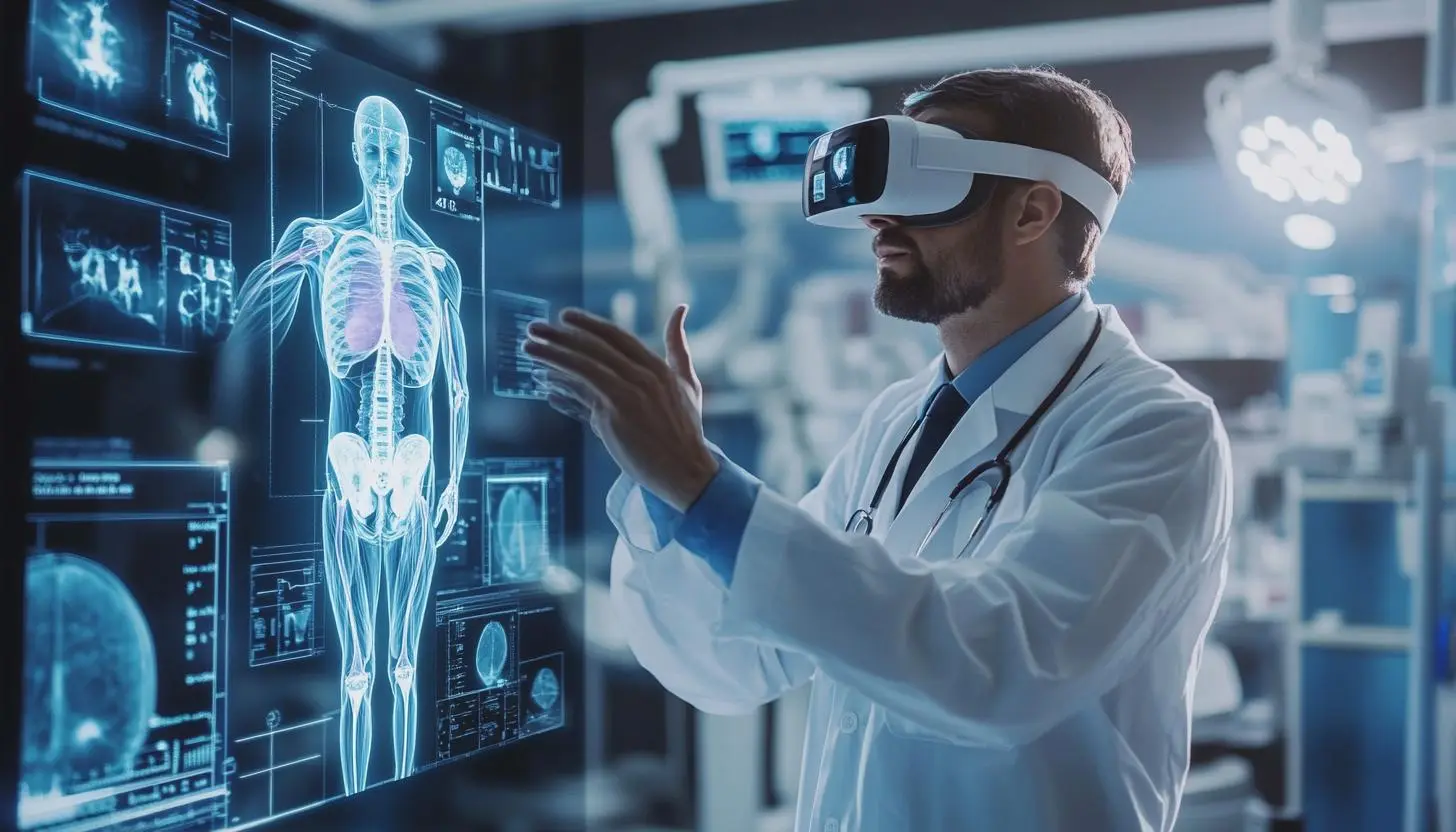
VR in medicine – How virtual reality is revolutionizing the healthcare industry
Virtual reality (VR) is no longer just relevant for gaming and entertainment. In medicine, it is fundamentally changing diagnostics, therapy and training. But what specific applications are there? What advantages does VR offer medical facilities and companies? And why is it worth renting
How VR is used in medicine
VR technology enables immersive experiences – i.e. fully immersive virtual spaces. It is precisely this characteristic that makes it particularly interesting for medicine. Here are some of the most important areas of application:
- Medical training: students and doctors can simulate complex procedures in a safe environment.
- Patient therapy: Virtual reality is used successfully in pain therapy, anxiety disorders and rehabilitation measures.
- Diagnostics and planning: surgeons use VR to prepare for difficult operations.
- Telemedicine: In combination with 5G, this opens up completely new possibilities for consistent remote treatment.
Advantages of VR in medicine
| Area of application | Advantages |
|---|---|
| Medical training | Risk-free training, interactive learning methods, realistic simulations |
| Surgery | Better preparation, lower risk of errors, innovative surgical planning |
| Rehabilitation | Motivating, personalized therapy approaches |
| Psychotherapy | Effective treatment of anxiety and trauma through exposure therapy |
Why rent VR technology instead of buying it?
For many companies and medical facilities, the question arises: buying or renting? New technologies in particular are associated with high acquisition costs. Renting VR equipment offers decisive advantages:
- Cost efficiency: No high investment costs, but flexible rental models.
- Technological up-to-dateness: access to the latest VR glasses and software solutions without a long-term commitment.
- Maintenance and support services: Rental contracts often include technical support and replacement devices.
- Flexibility: Perfect for temporary projects, training courses or research projects.
Practical examples of VR applications in medicine
The technology is already being used successfully in many areas. Here are some practical examples:
1. virtual OR preparation
Surgeons use VR simulations to plan difficult operations. Thanks to detailed 3D models, doctors can take a closer look at anatomical structures and prepare interventions with precision. This reduces the risk of unexpected complications.
2. VR in pain therapy
Pain can be significantly alleviated with virtual reality. Patients suffering from chronic pain or phantom pain, for example, can be distracted and calmed by immersive VR experiences. This often leads to a reduced need for painkillers.
3. rehabilitation after accidents or strokes
VR-supported physiotherapy helps patients to perform movements with precision. Playful elements motivate more training and at the same time promote neuronal plasticity – a decisive factor for rehabilitation after neurological diseases.
4. virtual reality in mental health
People with anxiety disorders or post-traumatic stress disorder (PTSD) benefit from VR-supported exposure therapies. In a safe environment, situations can be simulated that would be difficult to achieve with conventional forms of therapy.
Which VR technology is suitable for medical applications?
Not every VR headset is suitable for the medical sector. High-quality solutions with precise movement and eye tracking are often used here. Popular models include
- Meta Quest 3S: Wireless high-end glasses with impressive tracking technology.
- HTC Vive Focus 3: Perfect for medical training thanks to high resolution.
- Pimax 8K: Industry standard for accurate simulations with high quality displays.
FAQ – Frequently asked questions about VR in medicine
How expensive is the purchase of VR for medical purposes?
The costs vary greatly. High-quality VR glasses cost between 500 and 5000 euros, depending on the area of application. Individual software developments are usually even more expensive.
How quickly do doctors and patients learn how to use VR technologies?
Training depends on the application. Many VR systems are intuitively designed and only require brief training.
Can VR technologies be integrated into every hospital or practice?
Yes, with the right infrastructure and appropriate space, integration is possible without any problems. A flexible rental solution for evaluation before a permanent purchase is particularly effective.
Conclusion: Why invest in VR for medicine now?
VR in medicine offers immense opportunities – from training and therapy to diagnostics. It opens up completely new perspectives, especially for hospitals, research institutions and medical service providers. Anyone who wants to secure innovative solutions without making high investments should consider renting VR technology.
Interested in renting VR equipment for medical applications? Contact us and let us advise you!
Read more - You may also be interested in
Would you like to delve deeper into the topic or discover similar content? Below, we have compiled three additional articles for you that are thematically related to this article. These may also be relevant and interesting for your company.
Technology trends
Shadow AI in everyday office life: risks, rules and safe alternatives for companies (intended for event/project teams & temporary devices)
Shadow AI in everyday office life: Recognize 2026 risks & safe alternatives for event and

Advisor
Deepfake fraud & social engineering: protective measures for event staff, promotion teams and rental equipment
Deepfake fraud & social engineering 2025: How to protect events, promotion teams & rental equipment.
Feb

Technology trends
NIS2 compact for event IT & hardware rental: What companies should implement organizationally & technically now
NIS2 Directive 2025: How event IT & hardware rental companies are implementing organizational & technical
Feb
Technology trends
VR glasses 2025/2026 for trade fairs & events: device overview and selection criteria
VR glasses for trade fairs 2025/2026: The latest models & top criteria. How to choose
Feb

Sustainability
Renting hardware instead of buying: Environmental benefits, capacity utilization and carbon footprint
Why rent 2025 hardware? Reduce CO₂, optimize capacity utilization & benefit from sustainable IT solutions
Feb

Technology trends
USB-C/docking stations & “one cable for everything”: efficient workstation setups for events and pop-up offices
One cable for everything: How USB-C docking stations enable efficient workstation setups at events &
Feb

Sustainability
Sustainable logistics in IT: reusable transport boxes, return shipping without packaging waste & secure delivery
Sustainable IT logistics 2025: reusable transport boxes, waste-free returns & secure delivery. Modern solutions for
Jan

Sustainability
Circular economy through rental/leasing instead of buying: CO₂, costs and flexibility in comparison
Sustainable & flexible: circular economy through rental/leasing instead of buying! CO₂ reduction, costs & agility
Jan