





Leasing Solutions for Businesses
VR in medicine: How virtual reality is revolutionizing the healthcare industry and what hardware companies can rent
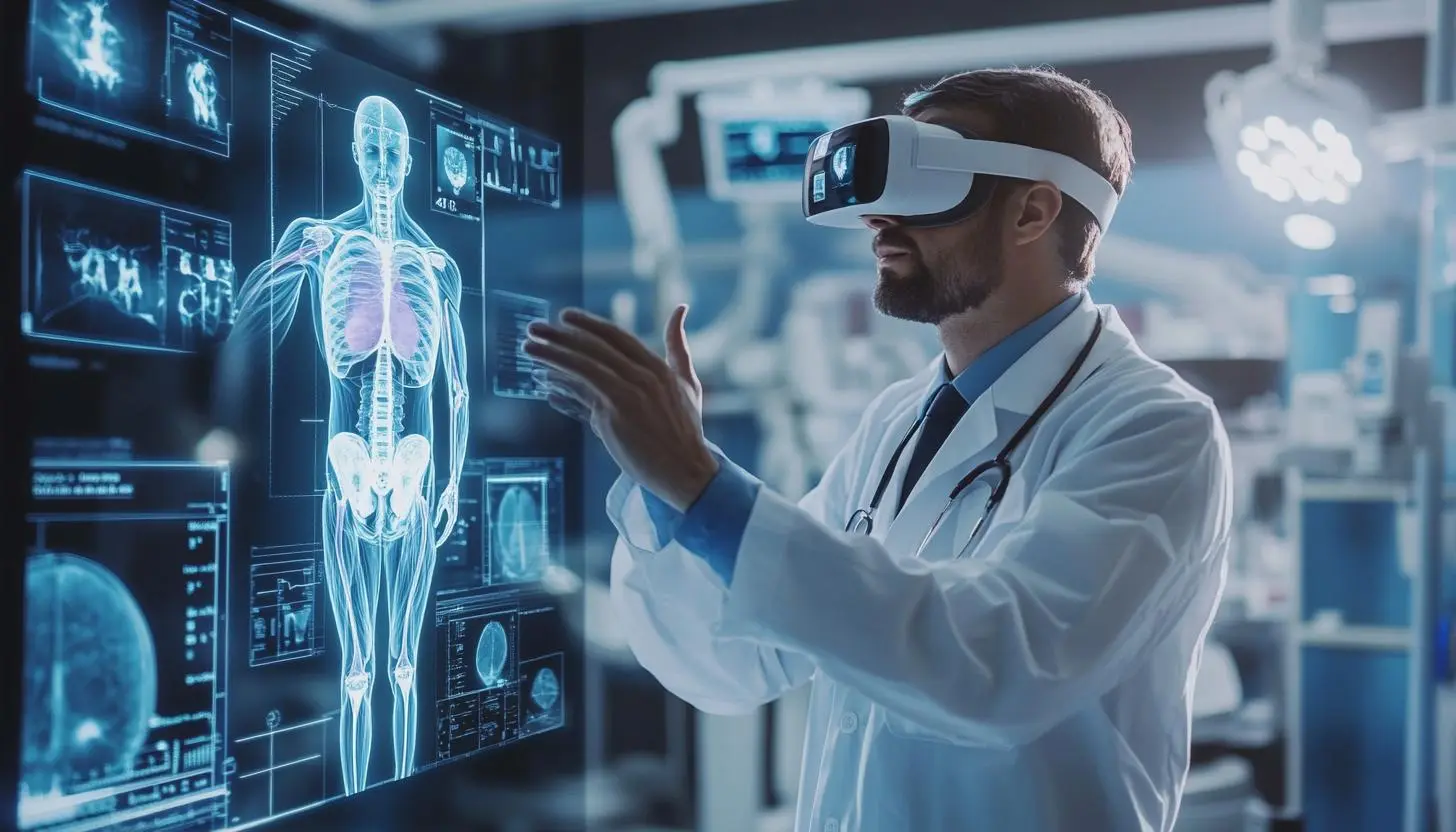
Virtual Reality in Medicine: Applications, Opportunities and Technology at a Glance
Virtual Reality has evolved from a niche gaming product into an established part of modern medical technology. More and more hospitals, universities, rehabilitation centres and research institutions are using the technology to improve treatments, train medical staff and offer patients new forms of therapy. The reason lies in VR’s unique ability to fully immerse users in a computer-generated environment. This immersion creates opportunities in healthcare that simply cannot be achieved with conventional methods. Anyone who would first like to test the technology without commitment can rent suitable Virtual Reality hardware flexibly from get-IT-easy.
In this article, you will learn how Virtual Reality is used in medicine, what advantages the individual fields of application offer, which technology is suitable for clinical use and what institutions should consider when introducing VR.
What Does Virtual Reality Mean in a Medical Context?
Virtual Reality describes a fully computer-generated environment that users enter through a VR headset, also known as a head-mounted display. Head and hand movements are tracked in real time and transferred into the virtual world. In a medical context, several different levels of technology are commonly distinguished:
- Fully immersive VR: The user is completely separated from the real world and interacts exclusively with the virtual environment – ideal for simulations and exposure therapy.
- Augmented Reality (AR): Digital information is overlaid onto the user’s real-world field of view, for example to display anatomical data during surgery. Mixed Reality headsets such as the Microsoft HoloLens 2 are suitable for these applications.
- Mixed Reality (MR): A combination of real and virtual elements that can interact with each other.
Fully immersive VR is used for most therapeutic and training applications because reducing distractions from external stimuli and creating a controlled environment provide significant advantages.
Applications of VR in Medicine
The areas in which Virtual Reality is used in healthcare are diverse and continue to expand. The following fields are among the most relevant applications in 2026.
Medical Education and Training
Future doctors, nurses and surgeons can use VR to practise complex procedures and emergency situations repeatedly without creating any real risk for patients. Anatomical structures can be explored in three dimensions, individual organs can be isolated and procedures can be practised step by step. Studies indicate that VR-based training can significantly accelerate the learning curve and reduce error rates during real procedures.
One particularly valuable advantage is that rare medical conditions or complicated operations, which may only occur occasionally in practice, can be simulated and practised repeatedly under controlled conditions. For training sessions with multiple participants, wireless standalone headsets such as the Meta Quest 3 can easily be provided in the required quantities.
Surgical Planning and Preoperative Preparation
Before demanding procedures, surgeons can use VR to examine patient-specific 3D models generated from CT and MRI data. Tumours, vascular structures or bones can be analysed from every angle. This enables more precise surgical planning, shorter operating times and a reduced risk of unexpected complications.
Pain Management
VR-assisted pain management is already an established and well-researched field of application. By immersing patients deeply in a virtual environment, their attention can be redirected away from pain. VR is used, among other things, for:
- Dressing changes for burn patients
- Chronic pain conditions
- Phantom pain following amputations
- Painful procedures such as injections or minor interventions
In many cases, this can reduce the need for pain medication – an important consideration given the potential side effects and dependency risks associated with many analgesics.
Rehabilitation and Physiotherapy
After strokes, accidents or orthopaedic procedures, VR can support the recovery of movement patterns. Gamified exercises motivate patients to train regularly and complete a high number of repetitions. At the same time, visual feedback can promote neuroplasticity, the brain’s ability to reorganise and form new connections. Therapists can adjust the level of difficulty individually and measure progress objectively.
Psychotherapy and Mental Health
VR exposure therapy has proven useful in the treatment of anxiety disorders, phobias and post-traumatic stress disorder (PTSD). Patients are gradually exposed to anxiety-inducing situations in a controlled and safe environment, such as heights, crowds or air travel. The therapist can precisely control the intensity and intervene at any time. VR is also increasingly being used in the treatment of depression and for stress reduction through mindfulness and relaxation applications.
Telemedicine and Remote Treatment
Combined with fast networks such as 5G, VR enables new forms of location-independent treatment. Specialists can join virtual environments, review 3D data together with colleagues or support patients remotely. This creates particularly valuable opportunities for rural areas with limited access to medical specialists.
Advantages of Virtual Reality in Healthcare at a Glance
| Area of Application | Specific Benefits |
|---|---|
| Education and training | Risk-free training, unlimited repetition, realistic simulation of rare cases |
| Surgery | More precise surgical planning, shorter procedures, reduced risk of complications |
| Pain management | Distraction from pain, reduced need for medication, few side effects |
| Rehabilitation | Greater motivation, measurable progress, promotion of neuroplasticity |
| Psychotherapy | Controlled exposure therapy, safe environment, individually adjustable intensity |
| Telemedicine | Location-independent care, collaboration between specialists, support for rural areas |
Which VR Technology Is Suitable for Medical Use?
Not every VR headset meets the requirements of a medical environment. Key factors include high image resolution for detailed visualisation of anatomical structures, precise head and hand tracking, good wearing comfort during longer sessions and easy hygiene management when devices are shared between users. Frequently used models available to rent from get-IT-easy include:
- Meta Quest 3 / Quest 3S: Wireless standalone headsets with a strong price-performance ratio, ideal for therapy and training applications.
- HTC Vive Focus 3: High resolution and professional tracking, popular in training and research environments.
- Pimax 8K: Extremely high image clarity for demanding simulations requiring maximum detail.
For hygienic use between multiple users, suitable VR accessories such as disposable face covers or disinfection solutions can also be added. Software plays an equally important role. From certified medical applications for therapeutic purposes to anatomical learning platforms, the right software ultimately determines whether the technology delivers real value in everyday clinical use.
Rent or Buy VR Technology?
Because VR technology is developing rapidly and high-quality systems can be expensive to purchase, many institutions need to decide which procurement model is most suitable. Renting VR equipment offers several advantages over buying it outright:
- Low financial risk: No large one-off investment, only predictable rental costs.
- Access to current technology: Use the latest headsets and software without being tied long-term to hardware that may become outdated quickly.
- Support included: Maintenance, technical support and replacement devices are often included in rental models.
- Flexibility: Ideal for pilot projects, temporary training sessions, conferences or fixed-term research projects.
- Test before purchasing: Institutions can evaluate the technology in real-world use before making a long-term commitment.
At get-IT-easy, you can rent the right VR headset for as little as one day – optionally preconfigured with the required apps and project-specific settings. For a more detailed overview of available models, see our article “Which VR Headset Is Currently the Best?”.
Challenges and Limitations of VR in Medicine
Despite its many opportunities, the limitations of the technology should also be considered realistically. The most important challenges include:
- Cybersickness: Some users experience nausea or dizziness, particularly during prolonged use – choosing suitable applications is therefore essential.
- Regulatory requirements: VR software used for therapeutic purposes is often classified as a medical device and is therefore subject to corresponding approval requirements.
- Data protection: Sensitive health data and biometric tracking data must be processed securely.
- Training requirements: Staff need to be trained in the use of the technology, even though modern systems are generally intuitive to operate.
- Hygiene: For shared devices, easy-to-clean materials and replaceable face cushions are important.
Outlook: The Development of VR in Medical Technology in 2026
The importance of Virtual Reality in medicine will continue to grow. Advances in image resolution, eye tracking and haptic feedback are making simulations more realistic than ever. At the same time, standalone devices are lowering the barriers to entry, allowing smaller medical practices and rehabilitation facilities to use the technology as well. Combined with artificial intelligence, adaptive therapy programs are emerging that can adjust in real time to a patient’s progress. VR is therefore evolving from a promising innovation into an established tool in modern medicine.
Frequently Asked Questions About Virtual Reality in Medicine
How Much Does VR Technology for Medical Applications Cost?
Depending on the model and intended use, VR headsets typically cost between around €500 and €5,000. Additional costs may apply for specialised or certified software, which can be considerably more expensive. Rental models significantly reduce the barrier to entry because they eliminate high upfront purchase costs. At get-IT-easy, the specific rental price depends on the device, quantity, rental period and required accessories and is provided as an individual quotation.
Is Virtual Reality in Medicine Scientifically Proven?
Yes. In areas such as pain management, exposure therapy for anxiety disorders and rehabilitation, numerous studies support the effectiveness of VR. Research is still ongoing in other areas, but the results are predominantly promising.
How Quickly Can VR Be Integrated Into a Medical Practice or Hospital?
With a suitable room, reliable power supply and sufficient space for movement, integration can be completed quickly. Standalone headsets do not require complex cabling. A trial period using a rental solution can make adoption even easier – available devices can be supplied within Germany via express or overnight shipping.
Who Is VR in Medicine Not Suitable For?
Patients who are highly susceptible to cybersickness, have certain neurological conditions or epilepsy should only use VR after consulting a medical professional. Caution is also advised during acute psychotic episodes.
Conclusion
Virtual Reality has evolved from a futuristic concept into a practical technology for healthcare. Whether in education, surgical planning, pain management, psychotherapy or rehabilitation, the range of applications is broad and the medical benefits have already been demonstrated in many areas. For hospitals, medical practices and research institutions that want to explore the technology without making a large upfront investment, renting VR equipment is an ideal way to get started. It allows organisations to explore the potential of VR in medicine flexibly and with limited financial risk. Simply add the devices you need to the request list and get-IT-easy will provide you with an individual quotation tailored to your requirements – we are also happy to advise you personally on the right VR equipment for your specific use case.
Read more - You may also be interested in
Would you like to delve deeper into the topic or discover similar content? Below, we have compiled three additional articles for you that are thematically related to this article. These may also be relevant and interesting for your company.

Leasing Solutions for Businesses
Rental vs. Buying Trade Show and Event Hardware: Costs, Flexibility, and Typical Setups for Businesses
Rental of trade show and event equipment instead of buying it: Cut costs, stay flexible,
Sep

Leasing Solutions for Businesses
Bring-Your-Own-Device vs. Rented Devices: When Each Strategy Is Worth It for Doctoral Programs
BYOD or Rented Devices? 📱 Find out which strategy is best for promotions in 2026—considering
Aug
Leasing Solutions for Businesses
TV/Display Rentals for Trade Show Booths & Events: Resolution, Mounts/Stands, Setup & Data Protection
TV and Display Rentals for Trade Show Booths and Events: Tips on resolution, mounts, stands,
Aug
Guide
Transfer Data Quickly Between PCs Without a USB Drive: Simple Methods for Event Teams
Transfer data quickly between PCs without a USB drive: simple, secure methods for event teams—from
Aug

Technology Trends
EUDI Wallet & Digital Identities: Potential Applications for Check-In, Access Control, and Verification at Events
EUDI Wallet at Events: Digital identities for fast check-in, secure access control, and reliable verification.
Aug
Sustainability
Making Packaging & Logistics Sustainable: Reusable Shipping Containers, Return Shipping Processes, and CO2 Reduction
📦 Making Packaging & Logistics Sustainable: Reusable shipping boxes, efficient return processes, and lower CO₂
Aug

Technology Trends
5G & Alternative Event Internet: Wi-Fi/5G Setup, VoWiFi, and Stratospheric Internet—What’s Realistic?
A Look at Internet for Events in 2026: 5G, Wi-Fi Setup, VoWiFi, and Stratospheric Internet.
Jul

Guide
Secure Wi-Fi on the Go & at Events: Which Smartphone/Hotspot Features You Should Disable and Why
Secure Wi-Fi on the Go & at Events: These Smartphone & Hotspot Features You Should
Jul