




Technology trends
Future Trend: How VR Trade Fairs are Changing the Event Industry
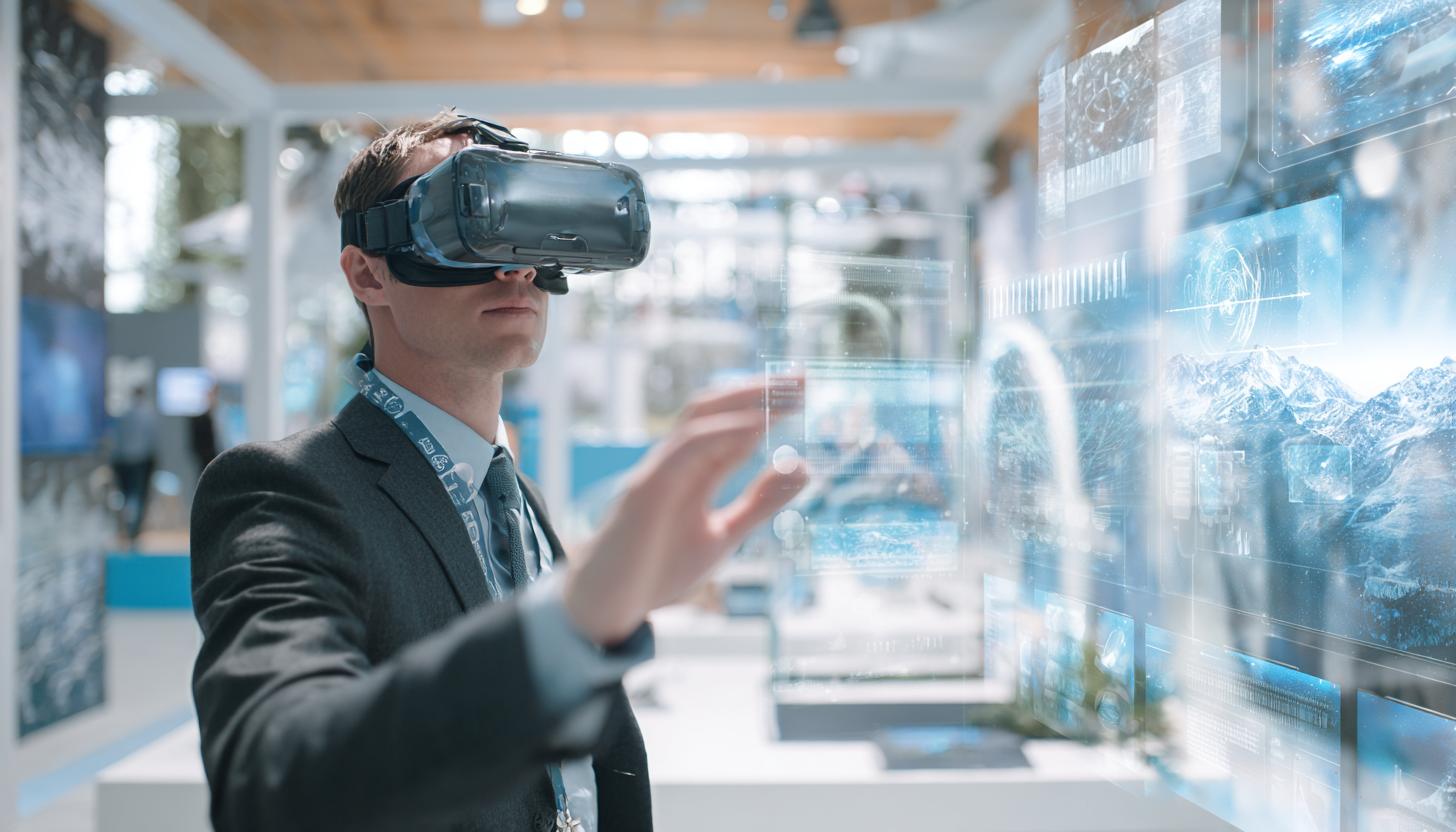
Future Trend: How VR Trade Fairs are Changing the Event Industry
The event industry is on the verge of fundamental change. In the age of digitalization and globalization, virtual experiences are gaining increasing importance. A particularly exciting trend that has been rapidly developing recently are so-called
As a provider of technology solutions and rentals in the B2B sector, we are intensively engaged with this forward-looking topic. In this blog post, we shed light on current developments surrounding VR trade fairs, explain the added value for companies, and provide concrete impulses for implementation and getting started.
What are VR Trade Fairs?
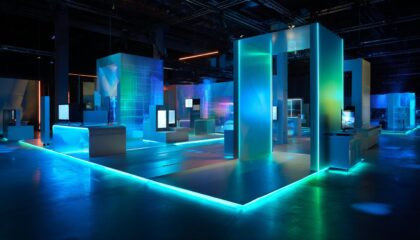
VR trade fairs (Virtual Reality trade fairs) are digital events where visitors can enter immersive exhibition spaces using virtual reality technology – just like a classic in-person trade fair, but location-independent and interactively experienceable. Visitors conduct conversations with avatars, explore digital exhibition booths, participate in live presentations, or examine products in 3D.
Participation primarily takes place via a VR headset, such as the Meta Quest 3 or PICO 4 Enterprise, both of which are now widely used in business environments. VR environments are usually supplemented by browser access, which enables low-threshold participation with a PC or smartphone – but with limited immersion.
Why VR Trade Fairs are Becoming Increasingly Relevant
Since the Corona pandemic, digital trade fairs have experienced a significant boom. What was once an emergency solution has now developed into a serious format that offers many advantages:
- Independence from location and time: Participants from all over the world without travel costs or time expenditure.
- Immersive product presentations: Products can be experienced interactively in 3D – ideal, for example, for machinery, software, or architecture.
- Sustainability: Reduced travel and resource consumption in organization.
- Automated data collection: Visitor movements, interests, and interactions can be tracked and analyzed in compliance with GDPR.
In 2025, VR trade fairs will therefore increasingly become part of hybrid event strategies. Major players like Siemens, Bosch, or BMW are already relying on virtual showrooms and VR product presentations – with an increasing trend also in the SME sector.
Technology Trends 2025 for VR Trade Fairs
The technological development around VR headsets from Meta and other hardware and software platforms has reached a considerable level in 2025. Particularly relevant trends in the business environment are:
| Trend | Description |
|---|---|
| Standalone VR Headsets | Devices like Meta Quest 3 or HTC Vive XR Elite no longer require a PC and are ideal for rental use at roadshows & trade fairs. |
| WebXR & Web3D | Browser-based VR environments enable low-threshold access for participants without special hardware. |
| AI-powered Avatars | Intelligent conversational partners increase interaction and enable automated consultation in VR settings. |
| Data Integration & Analytics | Platforms like rooom, VREXperience, or Virbela enable detailed visitor analytics and direct CRM exporting. |
Practical Examples: How Companies Use VR Trade Fairs in 2025
More and more companies are integrating VR trade fairs into their sales and marketing strategies. Here are some inspiring practical application scenarios:
- 3D Product Presentations: Machine manufacturers allow complex devices to be explored in virtual showrooms – including interactive functions.
- Recruiting Events: Employers invite talents to immersive career fairs – with 360° insights into company departments or onboarding tours.
- Real Estate & Architecture: Buyers experience properties in VR before they are built – also ideal for international investors.
- Market Research: Realistic product and packaging tests under controlled conditions in a digital trade fair environment.
VR Headsets for Trade Fairs: The Right Hardware for Your VR Event Strategy
The choice of VR headset is crucial for successful implementation. As a B2B provider for rental solutions, you receive powerful, tested devices from us, including setup, technical support, and optional 360° service.
Whether you are particularly interested in a Meta VR headset, Pico or Pimax VR headsets, or even HTC Vive Cosmos: We offer a wide selection of current models for short- or long-term rental.
Currently Popular Models for Rental for VR Trade Fairs:
| Model | Advantages | Applications |
|---|---|---|
| Meta Quest 3 | Standalone, high resolution, easy to use, fits every budget | Product presentations, interactive tours, training |
| PICO 4 Enterprise | Business-ready, integrated device management, high fast-charging function | Trade fair appearances, training, sales demos |
| HTC Vive Cosmos | Modular, Mixed Reality capable, top tracking | Product development, architecture, Industry 4.0 |
How to Start Your First VR Trade Fair
When planning a VR trade fair, it is advisable to proceed in a structured manner. Here is a brief guide for your internal project planning:
- Define objectives: Is it about lead generation, recruiting, brand building, or training?
- Select the appropriate platform: Depending on the degree of interaction, systems like Spatial.io, Virbela, or rooom are suitable.
- Produce VR content: With 3D data, CAD, or 360° media – use our partner infrastructure if needed.
- Rent VR headsets and end devices: Depending on the application, we recommend current models such as the Meta Quest 3 or PICO 4 Enterprise – ready for use with pre-configured software for your VR trade fair.
- Promote and analyze the event: Use teasers, newsletters, and invitations. Don’t forget evaluation via CRM integration!
FAQ – Frequently Asked Questions about VR Trade Fairs
What internet connection is necessary for VR trade fairs?
A stable Wi-Fi connection with at least 30 Mbps is recommended. For business platforms with razor-sharp graphics, you should aim for at least 50 Mbps.
How many participants can attend a VR trade fair simultaneously?
Depending on the platform, events with up to several thousand visitors are possible. For smaller, more interactive trade fairs, a limit of approximately 100-300 simultaneous users is recommended.
What are the costs for a VR trade fair?
The costs vary greatly. A simple VR presentation can be realized for under €5,000. Larger events or complete Digital Twins amount to €10,000–€50,000 including technology, graphics, and support. With us, you can rent VR technology cheaply on a daily or weekly basis.
Is training necessary to use VR headsets?
Our devices arrive ready for use. If required, you will receive a short onboarding video or telephone support from our technicians. Operation can be learned by inexperienced users in a few minutes.
Conclusion: Invest in the Virtual Future of the Trade Fair World Now
In 2025, VR trade fairs are no longer at the beginning, but are an integral part of innovative event strategies. With low logistical effort and a strong experience factor, they offer ideal conditions for B2B communication, lead generation, and customer loyalty. Especially with a VR headset at trade fair deployments, you open up new target groups, create wow moments, and stand out from the competition.
As a technology partner and rental service provider, we support your company in implementation. From the provision of modern VR headsets and pre-configured systems to partnerships with content agencies – everything from a single source.
Submit your inquiry today and secure the latest VR hardware for your next event. Inquire about Meta & other VR headsets for events now.
Read more - You may also be interested in
Would you like to delve deeper into the topic or discover similar content? Below, we have compiled three additional articles for you that are thematically related to this article. These may also be relevant and interesting for your company.

Rental solutions for companies
iPads/tablets for registrations & lead capture at events: setup, accessories and best practices
iPads & Tablets 2026 for Event Registration & Lead Capture: Top Setup, Accessories & Best
Apr
Technology trends
Apple vs. Windows in event use: which devices are better suited for which use cases
Apple or Windows for events in 2026? We show strengths, weaknesses & areas of application
Apr
Advisor
Phishing & social engineering at trade fairs: Typical attacks and protective measures for teams on site
Phishing & social engineering at trade fairs 2026: Recognize typical attacks, protect your team &
Mar

Advisor
Windows 11 rollout & end of Windows 10 support (2026): What companies should consider now when renting and leasing devices for projects, events and rollouts
Windows 11 rollout & end of support for Windows 10: What companies need to consider
Mar
Rental solutions for companies
Fiber to the room (adhesive fiber optics) for exhibition stands & pop-ups: plan, install and remove temporary high-speed cabling without leaving any residue
Discover the advantages of adhesive glass fiber for your exhibition stand: high-speed, flexible, residue-free &
Mar

Technology trends
Shadow AI in everyday office life: risks, rules and safe alternatives for companies (intended for event/project teams & temporary devices)
Shadow AI in everyday office life: Recognize 2026 risks & safe alternatives for event and
Mar

Rental solutions for companies
Plan event IT accessories correctly: stands, brackets, adapters & cables without stress
Plan your event IT accessories stress-free! Tips on stands, brackets, cables & more. Rent cleverly
Mar
Sustainability
Energy efficiency in temporary setups: energy-saving displays, mini PCs, standby concepts and on-site operation
Energy-efficient event technology 2026: Discover smart displays, mini PCs & standby tricks for sustainable events!
Mar