





Guide
The Benefits of Hardware Rental for Healthcare Facilities
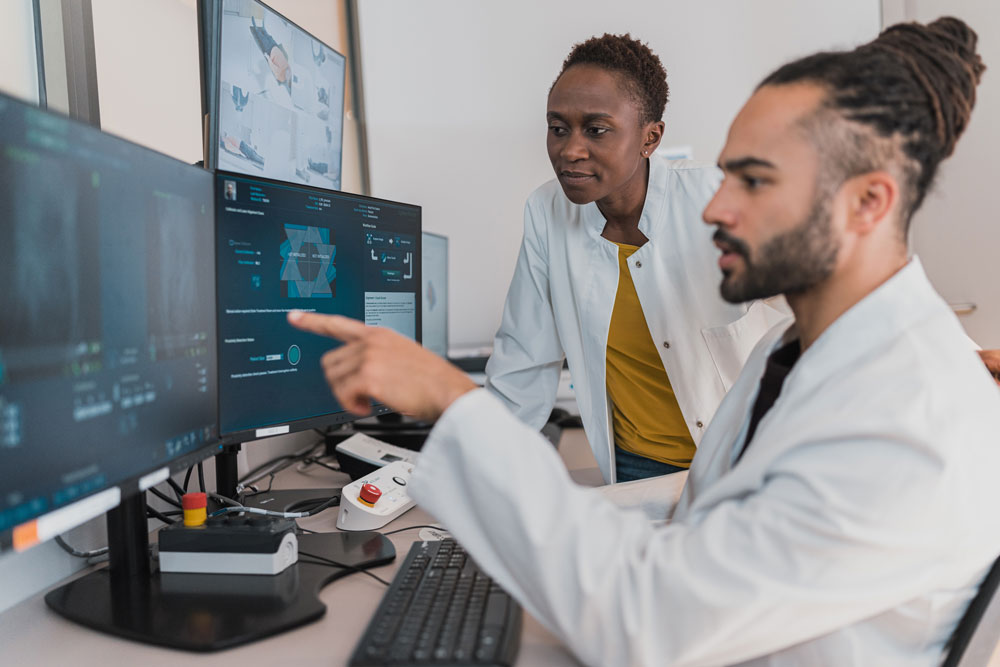
The healthcare industry is a sector that is constantly growing and evolving. With the ongoing introduction of new technologies and improvements to existing ones, it is essential that healthcare facilities stay up to date to ensure optimal patient care.
The demands placed on IT infrastructure in healthcare facilities are enormous. It must be capable of handling a wide range of tasks, from managing patient data and supporting medical devices to providing telemedicine services. This requires robust, reliable, and secure hardware, such as tablets, desktop PCs, or laptops. Essential accessories like stands and wall mounts are also important. However, purchasing this hardware can be expensive, especially for smaller facilities or those with limited resources.
That is why more and more healthcare facilities are turning to hardware rental. Hardware rental allows facilities to stay up to date with the latest technology without having to bear the high upfront costs of purchasing equipment. This offers a number of benefits that help optimize patient care.
Benefits for the Healthcare Industry
1. Stay up to date
Hardware technology is evolving rapidly. Through hardware rental, healthcare facilities can ensure they always have access to the latest equipment. This means they always have the most efficient and effective tools available to improve patient care.
Hardware rental protects against the risk of using outdated technology. Purchasing equipment can lead to long-term commitments that make it difficult to upgrade. With leasing models, healthcare facilities can ensure that they always have access to state-of-the-art equipment without having to deal with selling or disposing of outdated technology.
2. Scalability
With hardware rental, healthcare facilities can scale their IT infrastructure as needed. For example, if additional devices are required, they can simply be added. Similarly, devices that are no longer needed can be removed. This enables facilities to respond flexibly to changes in patient demand or to new technologies. The flexible scalability provided by hardware rental enables effective use of resources. Facilities can tailor their IT infrastructure precisely to their actual needs. Adding or removing devices is a seamless process, ensuring efficient use of space and energy. This adaptability not only promotes more sustainable operations but also ensures cost-effective use of resources.
3. Sustainability
Rental hardware can help reduce a healthcare facility’s environmental footprint. Instead of disposing of old equipment when it is replaced, it can be returned to the rental company, which can then either rent it out again or dispose of it in an environmentally friendly manner. The electronics industry contributes significantly to the generation of electronic waste, which often contains materials that are difficult to break down. Rental and return of equipment minimizes this electronic waste. This is particularly important because many electronic devices contain potentially harmful substances that can have environmental impacts if disposed of improperly.
4. Risk Mitigation
Unexpected problems, such as equipment failures or sudden technological changes, require quick solutions. Rental equipment enables healthcare facilities to quickly adapt or replace devices as needed. This minimizes downtime, ensures continuous patient care, and prevents financial losses that could result from extended repair times or the purchase of new equipment. By enabling rapid adaptation to technological changes and minimizing downtime, leased equipment helps increase the efficiency of the healthcare facility. Continuous operation without prolonged interruptions enhances the effectiveness of patient care and helps the facility achieve its goals.
5. Budget Planning and Transparency
The benefits of hardware rental extend beyond transparent budget planning by providing healthcare facilities with comprehensive financial security. Thanks to the clear cost structure, not only can rental costs be calculated precisely, but other financial aspects can also be taken into account.
Predictable rental costs enable long-term financial planning and investment in patient care. Healthcare facilities can rest assured that their budgets will not be strained by unexpected expenses for maintenance, repairs, or replacement parts. This creates a stable financial foundation on which long-term strategic decisions can be made.
The transparent cost structures associated with hardware rentals for healthcare facilities allow for greater financial flexibility. Budgets can be redirected specifically to other areas of patient care, as there are no unforeseen expenses associated with the operation and maintenance of hardware. This enables efficient resource allocation for projects, training, or innovative technologies that maximize patient benefits.
Conclusion
In summary, hardware rental offers healthcare facilities an effective way to keep their IT infrastructure up to date, control costs, and optimize patient care. While purchasing hardware may still be an option for some facilities, rental offers a flexible, cost-effective, and secure alternative that is worth considering.
Read more
Environmental Benefits of Hardware Rental
Environmental Benefits of Hardware Rental: Act Sustainably, Conserve Resources, and Make Efficient Use of Modern
Jan
Printers for business: The best printers for offices and events
Printers for companies: The best models for offices and events - flexible rental and professional
Mar
Hardware accessories recommendations 2024: Ultimate guide
Hardware accessory recommendations: Perfect additions for your devices - flexible rental and efficient working!
Mar
Read more - You may also be interested in
Would you like to delve deeper into the topic or discover similar content? Below, we have compiled three additional articles for you that are thematically related to this article. These may also be relevant and interesting for your company.
Leasing Solutions for Businesses
Rental vs. Buying Trade Show and Event Hardware: Costs, Flexibility, and Typical Setups for Businesses
Rental of trade show and event equipment instead of buying it: Cut costs, stay flexible,
Sep
Leasing Solutions for Businesses
Bring-Your-Own-Device vs. Rented Devices: When Each Strategy Is Worth It for Doctoral Programs
BYOD or Rented Devices? 📱 Find out which strategy is best for promotions in 2026—considering
Aug
Leasing Solutions for Businesses
TV/Display Rentals for Trade Show Booths & Events: Resolution, Mounts/Stands, Setup & Data Protection
TV and Display Rentals for Trade Show Booths and Events: Tips on resolution, mounts, stands,
Aug
Guide
Transfer Data Quickly Between PCs Without a USB Drive: Simple Methods for Event Teams
Transfer data quickly between PCs without a USB drive: simple, secure methods for event teams—from
Aug

Technology Trends
EUDI Wallet & Digital Identities: Potential Applications for Check-In, Access Control, and Verification at Events
EUDI Wallet at Events: Digital identities for fast check-in, secure access control, and reliable verification.
Aug
Sustainability
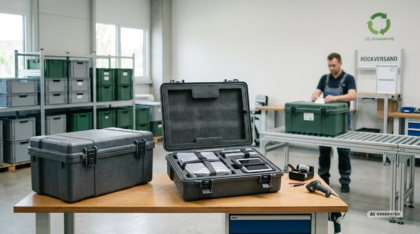
Making Packaging & Logistics Sustainable: Reusable Shipping Containers, Return Shipping Processes, and CO2 Reduction
📦 Making Packaging & Logistics Sustainable: Reusable shipping boxes, efficient return processes, and lower CO₂
Aug

Technology Trends
5G & Alternative Event Internet: Wi-Fi/5G Setup, VoWiFi, and Stratospheric Internet—What’s Realistic?
A Look at Internet for Events in 2026: 5G, Wi-Fi Setup, VoWiFi, and Stratospheric Internet.
Jul
Guide
Secure Wi-Fi on the Go & at Events: Which Smartphone/Hotspot Features You Should Disable and Why
Secure Wi-Fi on the Go & at Events: These Smartphone & Hotspot Features You Should
Jul