




Guide
Secure Remote Access/Support Solutions for Event Hardware: RustDesk/Alternatives, Permissions & Logging
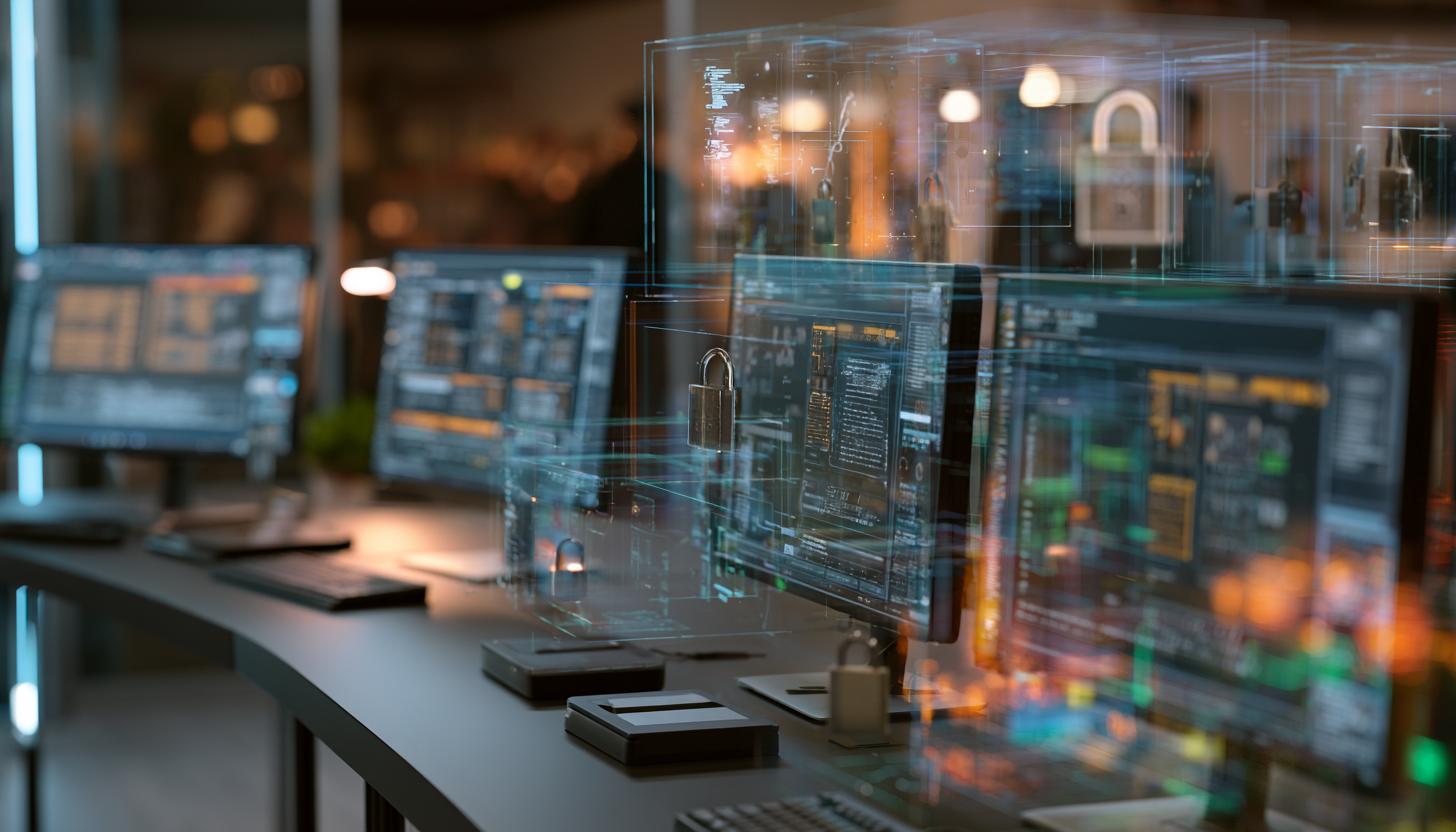
Secure Remote Access and Support Solutions for Event Hardware: RustDesk, Alternatives, Permissions, and Logging
Whether it’s a trade show, roadshow, annual shareholders’ meeting, accreditation event, festival, pop-up store, or corporate event: Today, mobile devices and event hardware must not only function properly but also be managed quickly, securely, and—ideally—without the need for on-site intervention. This is precisely where remote access to event hardware is becoming increasingly important. Event organizers, agencies, IT teams, and technical service providers need solutions that allow them to remotely maintain, configure, and monitor devices—and take immediate control of them when support is required. At the same time, requirements for data protection, rights management, logging, and reliability are on the rise.
In practice, this affects far more than just individual laptops. iPads, Android tablets, kiosk systems, check-in devices, scanners, digital signage players, mini-PCs, event laptops, mobile routers, bonding solutions, and even printing systems must all be accessible and supportable remotely. Anyone who relies on makeshift tools, shared passwords, or uncontrolled remote access risks security vulnerabilities, data protection issues, and unnecessary outages during the event.
For B2B events in 2026, the following applies: A good remote access strategy is no longer just a “nice-to-have,” but rather an essential part of a professional event infrastructure. In this article, we’ll show you what requirements modern remote access solutions should meet, where RustDesk is a good fit, what alternatives are available, and how access rights and logging can be properly implemented. We’ll also explore how rental and managed services in the event context help make projects faster, more secure, and more scalable.
Why Remote Access Is So Important for Event Hardware Today
Event hardware operates under unique conditions. Devices are often used for only a few days or weeks at different locations. They run on temporary networks, are used by various teams, and must be set up under time pressure. On-site support is expensive, slow, and logistically complex. At the same time, even a minor issue at the reception area, the registration desk, or the speaker-ready desk can have a direct impact on visitor flow, brand perception, and event operations.
Remote access offers significant advantages in this context. Technicians can preconfigure devices before delivery, troubleshoot issues during operation, and reset configurations or analyze logs after the event. For international events or decentralized roadshows, multiple locations can be supported simultaneously without having to send staff to each site for every issue.
This is particularly relevant in the following scenarios:
- Check-in and registration using tablets, scanners, and badge printers
- Exhibition booths with kiosk systems, touchscreens, and presentation computers
- Equipment rentals for speakers, VIPs, sales teams, or groups of attendees
- Digital signage and information kiosks with centralized content and support requirements
- Temporary office and back-office setups at events or conferences
- Live streaming, control room, and production environments with multiple remote-capable systems
Professionals working in these fields don’t need a generic remote desktop solution; rather, they need a support strategy tailored to the specific conditions of each event. This applies to both traditional Windows systems and mobile devices such as Apple iPads on rental, which are frequently used for check-in, visitor guidance, or as presentation tools.
Requirements a Secure Remote Access Solution for Event Hardware Should Meet
On the Internet, the topic of remote maintenance is often viewed from the perspective of traditional corporate IT. The events sector, however, has its own priorities. These include easy deployment, fast connections, minimal user interaction, centralized management, and a robust security framework. The most important requirements can be divided into five categories.
First: rapid deployment. Event projects have tight schedules. A solution must be able to be rolled out in a standardized manner on rental devices, ideally via a golden image, MDM, RMM, or preconfigured deployment packages.
Second: Platform diversity. In event setups, Windows, Android, macOS, Linux, and iPadOS are used side by side. Not every tool supports all platforms equally well. Especially with tablets and kiosk modes, it’s important to check which features are actually supported. For example, those working with Microsoft Surface Pro devices require different support and management options than those using dedicated kiosk tablets.
Third: Security controls. These include encrypted connections, restricted access rights, session sharing, whitelisting, multi-factor authentication options, and the ability to use your own servers or relay infrastructures.
Fourth: Auditable logging. For customer devices, trade show demos, or personal data, it must be possible to trace who accessed what and when. This is not only technically sound but is also often relevant from a contractual and data protection perspective.
Fifth: operational reliability. Event settings often involve unstable Wi-Fi networks, cellular fallbacks, restrictive venue networks, and last-minute changes to the setup. The solution must be able to handle fluctuating connections and must not require a lengthy approval process to function.
RustDesk in Event Settings: Strengths, Limitations, and Typical Use Cases
In recent years, RustDesk has established itself as a highly regarded alternative to established remote maintenance tools. Its approach of allowing users to retain control over their own infrastructure is particularly appealing. This is attractive for companies that do not want to use a fully cloud-based third-party platform. This option is increasingly in demand, particularly in the European B2B environment and for data-sensitive projects.
RustDesk really shines when a flexible, relatively cost-effective, and self-managed remote access solution is needed. This can be particularly appealing for event hardware when customers want their own relay or rendezvous servers and when support teams want to operate independently of traditional SaaS models.
Typical benefits of RustDesk in an event context include:
- Self-hosting option for greater data sovereignty and infrastructure control
- Well-suited for standardized device fleets, especially in Windows environments
- Useful for temporary projects where a custom remote stack is required
- Of interest to companies that critically evaluate the licensing models of traditional providers
However, RustDesk should not be viewed across the board as the perfect one-size-fits-all solution. Depending on the event scenario, its feature set, governance, mobile support, integrations, and enterprise management should be weighed against those of other platforms. Anyone looking to manage large device pools with strict role models, support queues, session recording, SIEM integration, or deep MDM integration should carefully examine the architecture. In the event sector, it’s not the “cheapest” tool that matters, but the most reliable and the one that can be best documented.
Which alternatives to RustDesk are relevant for remote access event hardware
The market will be diverse by 2026. In addition to RustDesk, solutions such as TeamViewer, AnyDesk, Splashtop, BeyondTrust, ConnectWise ScreenConnect, Zoho Assist, RealVNC, and Microsoft-based remote access approaches will continue to be discussed in the professional support environment. In addition, there are UEM- and MDM-related options, such as Microsoft Intune, VMware Workspace ONE, SOTI, or Jamf—provided the platform supports the desired remote support capabilities at all.
When it comes to event hardware, it’s worth comparing options not only based on brand recognition but also on specific project requirements. Should access be unsupervised or restricted to authorized users only? Do external support partners need to be involved? Are there high-security requirements? Are Linux players, Android kiosk systems, or Windows registration devices used? Is session recording necessary? Is a dedicated server preferred?
| Solution Type | Particularly suitable for | Strengths in an event context | Possible limitations |
|---|---|---|---|
| RustDesk | Self-hosted setups, managed device fleets | Data sovereignty, flexible infrastructure, suitable for standardized rental devices | Depending on the use case, in-depth knowledge of architecture and operations may be required |
| TeamViewer / AnyDesk | Fast rollout, broad user base, heterogeneous environments | High brand recognition, good usability, quick access for support | Licensing and compliance checks are important; cloud dependency varies by model |
| BeyondTrust / Enterprise Remote Support | Highly regulated B2B environments, complex permission models | Strong governance, rights management, auditing, and a focus on security | Greater implementation effort and often higher costs |
| Splashtop / ScreenConnect / Zoho Assist | IT support, MSP-like setups, medium-sized device pools | Good balance between usability and manageability | Carefully review platform and feature details for each project |
| MDM- and UEM-related remote functions | iPads, Android Enterprise, kiosk scenarios | Centralized policies, device management, compliance control | Remote control is often limited or platform-dependent |
The best solution, therefore, depends not only on the tool but also on the operating model. In many cases, a combination makes sense—for example, MDM for policies and lifecycle management, supplemented by a dedicated remote maintenance tool for urgent support cases.
Permission Policies: Who Is Allowed to Do What on Event Devices?
A common mistake in event projects is granting overly broad remote access. When many stakeholders—including agencies, freelancers, trade show builders, registration service providers, and client teams—work together, there is a risk that passwords or master accounts will be shared informally. While this may seem convenient in the short term, it poses problems from a security and liability perspective.
Instead, a clear role model should be defined for remote access to event hardware. This starts with the question of whether a device may be operated remotely without supervision at all, or whether local authorization is always required. For leased devices in the B2B sector, it must also be clarified whether the lessor, the customer, or an external operator is responsible for first-level or second-level support.
Roller types like these have proven to be effective:
Read-Only Support: Access to status information, but no intervention.
Operator Support: Restart, app restart, simple configuration adjustments.
Admin Support: System changes, user management, policy adjustments.
Emergency Access: Time-limited access for critical incidents requiring special authorization.
The principle of granting the minimum necessary permissions is also important. Not every support technician needs file access, clipboard access, printer redirection, or shell access. The more sensitive the device’s use, the more granular session permissions, recording functions, and escalation steps should be. This is particularly relevant when powerful devices such as a Surface Pro 10 are used both as presentation devices and as productive work tools.
Logging and Traceability: Why Logging Is More Than Just a “Nice-to-Have”
In the event industry in particular, logs often take a back seat because speed is of the essence. But that’s exactly what makes it risky. If a problem occurs on a registration device, if data has been exported, or if a kiosk app closes unexpectedly, the only solution is a robust audit trail. Companies must be able to prove who accessed the system, when the session took place, and what actions were taken.
A good set of minutes should include at least the following points:
- Device ID, Location, or Event Assignment
- User account of the accessing supporter
- Time of connection establishment and termination
- Type of access, for example, View Only or Full Control
- Approval status and, if applicable, ticket or incident reference
- Optional session recording or screenshots for critical environments
In professional setups, this information is also linked to ticketing systems, SIEM platforms, or centralized logging systems. This not only provides evidence of compliance and data protection but also creates a solid foundation for lessons learned after the event.
Data Protection, GDPR, and Client Segregation for Rental Equipment
When event hardware is rented out, another factor plays a major role: devices move between different customers, projects, and locations. Therefore, it is not enough to simply install a remote access solution once and let it run indefinitely. Rather, the entire device lifecycle must be taken into account. This includes provisioning, project-specific access rights, data minimization, return, deletion, and reconfiguration for the next deployment.
For B2B service providers, client isolation is particularly critical. Support access must not inadvertently be possible across projects. Saved connection profiles, session data, and access tokens must also be managed in a controlled manner. In many cases, it makes sense to integrate event devices into clearly defined organizational structures only for the duration of the project.
Another factor relevant to data protection law is whether personal data is processed on the devices. With registration and check-in solutions, this is almost always the case. In these situations, data processing on behalf of a client, technical and organizational measures (TOMs), access restrictions, and logging should not be issues addressed after the fact, but rather part of the setup from day one.
Technical Best Practices for Reliable Remote Maintenance at Events
Remote access is only as good as the underlying infrastructure. At events, networks are often the real weak link. A professional setup therefore takes into account not only the tool itself, but also connectivity, fallbacks, and operational discipline.
Among other things, a clear separation of the production network and the guest network, reliable mobile network fallbacks, preconfigured device profiles, and a clearly defined support process have proven effective in event projects. Preparation prior to shipping or setup is equally important. Devices should be tested, inventoried, documented, and clearly labeled. Especially with larger fleets, this saves valuable minutes in an emergency.
Combining this with mobile device management is also useful in many event scenarios. MDM or UEM handles policies, device mode, app distribution, kiosk configuration, and compliance. The actual remote support tool is then used specifically for troubleshooting or operational support. This separation enhances clarity and security.
For stationary setups, control rooms, or registration stations, centrally manageable desktop PCs available for rental are often the more robust choice, whereas for space-constrained installations, compact systems such as the HP Pro Mini 400 G9 offer clear advantages in terms of transport, cabling, and remote administration.
Why Rental and Managed Services Offer Clear Advantages When It Comes to Remote Access
Many companies are faced with the question of whether to purchase and operate event hardware themselves or to rent it for projects. When it comes to remote access event hardware, there are many reasons to opt for rental combined with professional services. This is because not only the devices themselves, but also images, configurations, security policies, and support channels must be coordinated.
A specialized B2B rental company can prepare devices with an appropriate remote maintenance strategy even before delivery. This includes, for example, kiosk modes, user profiles, Wi-Fi and VPN configuration, MDM enrollment, remote support agents, role models, and logging specifications. Instead of improvising under time pressure before the event, the project starts with a tested environment.
In addition, customers benefit from predictable support processes. Those who request rental equipment that includes managed setup can often specify whether they prefer standby support only, active operational monitoring, or a full-service solution. This is particularly relevant for complex trade shows, international rollouts, and sensitive registration processes.
It also makes economic sense. The hidden costs of in-house ad hoc solutions are often underestimated. These include staffing costs, tool management, compliance efforts, replacement equipment, short-notice on-site deployments, and the time internal teams must invest in temporary project infrastructures. A rental and service model significantly reduces these inefficiencies.
This is particularly advantageous for mixed fleets: For mobile workstations in the back office, for example, an HP ProBook 450 G10 i7 might be a good choice, while front-end setups involving touch controls or digital visitor interaction tend to rely on tablets.
What Companies Should Specifically Look for When Making Their Selection
Anyone planning a remote access strategy for event hardware should not base their decision solely on price or brand recognition. More important are reliable answers to practical questions. Does the solution truly support your end devices? Can it be integrated into your security policies? Can roles be assigned at a granular level? Are the logs actionable? Is the setup scalable under time pressure? And who takes responsibility in the event of a malfunction?
That’s precisely why it can make sense to request not just equipment, but a complete solution. A provider that integrates event hardware, setup services, and support processes offers greater operational reliability than a provider that simply ships products. For customers, this means less coordination, faster response times, and a higher likelihood that the event will run smoothly.
This also applies to the specific choice of device: For high-quality presentations, creative showcases, or mobile POS scenarios, iPad Pro M4 13-inch rentals may be the right option, while an 11-inch iPad Air M2 rental is often perfectly sufficient for light, flexible event workflows.
FAQ
Which devices can typically be managed remotely for event support?
These often include Windows laptops, mini PCs, Android tablets, kiosk systems, digital signage players, scanners, printing systems, and, in some cases, iPads. The exact range of features depends on the operating system, tool, and device mode.
Is RustDesk suitable for professional event projects?
Yes, especially when self-hosting, data sovereignty, and controlled infrastructure are important. However, whether RustDesk is the best choice depends on the specific project, the platforms, the role model, and the compliance requirements.
Why is standard remote maintenance software often insufficient?
Events often require preconfigured device fleets, access control models, thorough logging, rapid scaling, and support under challenging network conditions. Many standard solutions only partially address these needs.
How important is logging for remote access event hardware?
Very important. Logs provide evidence, improve troubleshooting, and support data protection and compliance. Without logging, support actions often cannot be clearly traced after the fact.
Should remote access be combined with MDM?
In many cases, yes. MDM or UEM manages policies, kiosk modes, and app distribution. The remote access tool is then used for operational support and troubleshooting.
Why does rental of preconfigured event hardware make sense?
Because devices, remote access, security policies, and support processes can be set up in advance. This saves time, reduces risks, and significantly lightens the workload on internal teams.
Conclusion
Secure remote maintenance is a central component of professional technology provision in the event industry in 2026. Those who strategically plan for remote access to event hardware benefit from faster support, less downtime, and greater control over temporary device fleets. RustDesk is an interesting option here, especially when it comes to self-hosting and data sovereignty requirements. However, it’s equally important to consider alternatives, access rights policies, logging, data protection, and the actual operating conditions at events.
For companies, agencies, and event organizers, it’s worth considering not just a single tool, but an entire operational concept. Only the combination of suitable hardware, proper provisioning, a secure remote access solution, granular permissions, and robust logging creates the stability that live events require.
If you want to use event hardware for rental purposes and also operate or provide support for it remotely in a professional manner, a preconfigured B2B solution with clear processes is often the most efficient approach. This way, you receive equipment that not only arrives ready for use but can also be monitored and supported reliably, securely, and quickly during the event. Ultimately, that’s what makes the difference between improvised technical operations and an event that runs smoothly.
Read more - You may also be interested in
Would you like to delve deeper into the topic or discover similar content? Below, we have compiled three additional articles for you that are thematically related to this article. These may also be relevant and interesting for your company.
Leasing Solutions for Businesses
Rental vs. Buying Trade Show and Event Hardware: Costs, Flexibility, and Typical Setups for Businesses
Rental of trade show and event equipment instead of buying it: Cut costs, stay flexible,
Sep
Leasing Solutions for Businesses
Bring-Your-Own-Device vs. Rented Devices: When Each Strategy Is Worth It for Doctoral Programs
BYOD or Rented Devices? 📱 Find out which strategy is best for promotions in 2026—considering
Aug
Leasing Solutions for Businesses
TV/Display Rentals for Trade Show Booths & Events: Resolution, Mounts/Stands, Setup & Data Protection
TV and Display Rentals for Trade Show Booths and Events: Tips on resolution, mounts, stands,
Aug
Guide
Transfer Data Quickly Between PCs Without a USB Drive: Simple Methods for Event Teams
Transfer data quickly between PCs without a USB drive: simple, secure methods for event teams—from
Aug
Technology Trends
EUDI Wallet & Digital Identities: Potential Applications for Check-In, Access Control, and Verification at Events
EUDI Wallet at Events: Digital identities for fast check-in, secure access control, and reliable verification.
Aug
Sustainability
Making Packaging & Logistics Sustainable: Reusable Shipping Containers, Return Shipping Processes, and CO2 Reduction
📦 Making Packaging & Logistics Sustainable: Reusable shipping boxes, efficient return processes, and lower CO₂
Aug

Technology Trends
5G & Alternative Event Internet: Wi-Fi/5G Setup, VoWiFi, and Stratospheric Internet—What’s Realistic?
A Look at Internet for Events in 2026: 5G, Wi-Fi Setup, VoWiFi, and Stratospheric Internet.
Jul
Guide
Secure Wi-Fi on the Go & at Events: Which Smartphone/Hotspot Features You Should Disable and Why
Secure Wi-Fi on the Go & at Events: These Smartphone & Hotspot Features You Should
Jul