





Guide
Security Awareness for Events: Protection Against Social Engineering and Help Desk Impersonation (e.g., via Microsoft Teams)
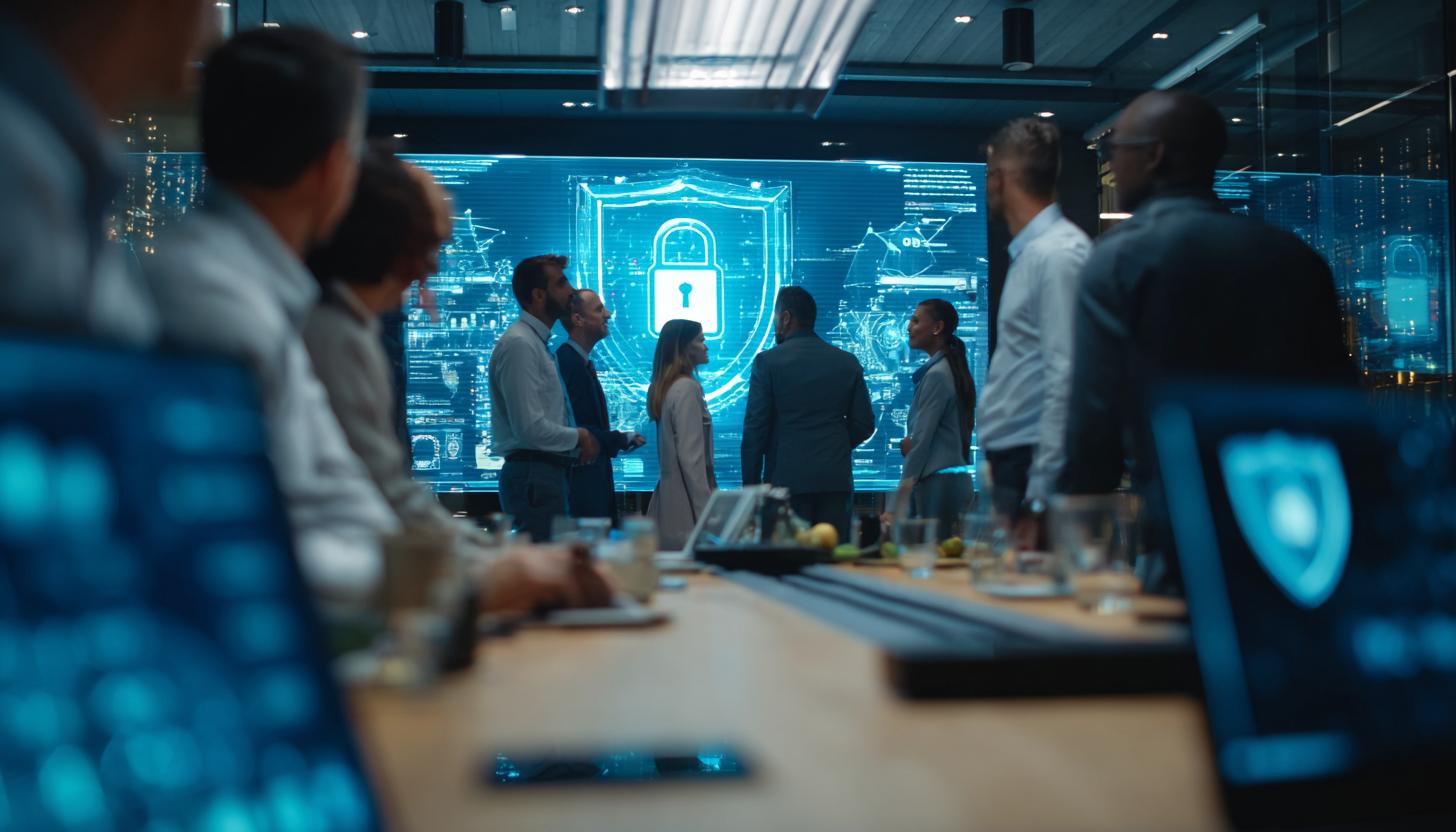
Security Awareness for Events: Protection Against Social Engineering and Help Desk Impersonation via Microsoft Teams and Similar Platforms
Security awareness events are more important than ever in 2026. Especially at trade shows, roadshows, conferences, annual shareholder meetings, product presentations, training sessions, and corporate events, numerous digital processes now intersect with large numbers of people, external service providers, last-minute changes, and intense time pressure. It is precisely this combination that makes events a prime target for social engineering. Attackers use not only emails but also, increasingly, collaboration platforms such as Microsoft Teams, messaging services, phone calls, QR codes, fake support messages, and help desk impersonation.
This is particularly critical for companies that rely on mobile devices, rental hardware, tablets, smartphones, laptops, digital signage, registration and check-in systems, or temporary user accounts for their events. This is because internal teams, agencies, hostesses, freelancers, technology partners, and event organizers often work together simultaneously in these settings. When a seemingly legitimate Teams message from “IT Support” or “Event Helpdesk” appears in this situation, many employees react too quickly—whether out of a desire to help or due to time pressure.
Those who take security awareness events seriously therefore protect not only data and accounts, but also processes, reputation, and business continuity. For B2B companies that use technology and mobile devices for events, this is a crucial competitive factor. After all, professional security doesn’t begin in the data center—it starts with the device in the hands of the event team.
Why Events Are a Particularly Attractive Target for Social Engineering
Events provide attackers with ideal conditions. There are many new contacts, ad hoc processes, user accounts set up on short notice, shifting responsibilities, and time frames in which decisions must be made quickly. At the same time, technical systems are often in use for only a few days and are operated on-site by people who do not work with the same security standards on a daily basis.
On top of that, communication surrounding events has changed dramatically. Microsoft Teams, Slack, WhatsApp alternatives, video calls, ticketing portals, and remote support are now standard. That is exactly where current attacks are targeting. Help desk impersonation is particularly dangerous because attackers pose as internal IT staff, external support teams, device management providers, or event technology service providers. They then make demands such as:
- Confirmation of an MFA code,
- the approval of a device in Mobile Device Management,
- the installation of an “urgent support app,”
- signing up for a purported event portal,
- or access to Teams, Outlook, SharePoint, or exhibitor data.
Today’s attacks are significantly more professional than they were just a few years ago. Messages appear credible, use correct logos and real names from LinkedIn or previous project documents, and tie in with actual event schedules. In many cases, these are no longer mass attacks, but rather targeted, context-specific deceptions aimed at event managers, IT staff, sales representatives, control rooms, registration teams, or external technical crews.
Help Desk Impersonation via Microsoft Teams: How the Attack Unfolds in Practice
A typical scenario begins with the attacker making contact via Microsoft Teams. The attacker poses as a member of the IT service desk, a security administrator, or an external rollout partner. For example, they might claim there’s a problem with a conference tablet, an exhibitor’s laptop, a registration iPad, or an account that needs to be activated for the event. They often apply pressure by saying things like: “Otherwise, check-in will be canceled,” “The presentation devices aren’t compliant,” “The Teams rooms will stop working any minute now,” or “The login credentials need to be synced immediately.”
This is usually followed by the actual manipulation. The target is prompted to provide a code, click on a link, start a remote session, reset a password, or confirm an authentication request. Modern attackers combine social engineering with technical methods such as MFA fatigue, OAuth abuse, fake login pages, or QR phishing.
This method has a high probability of success, especially in the event industry, where remote support is the norm. So it’s not unusual for a help desk to get in touch. That’s exactly why processes, responsibilities, and approvals must be clearly defined before the event. In this context, “security awareness events” means that employees and service providers must be able to recognize when support is genuine—and when it isn’t.
Current Threats in 2026 in the Field of Event Technology and Mobile Devices
The security situation surrounding events has continued to deteriorate in 2026. Attackers are combining social engineering, identity theft, and device misuse in increasingly targeted ways. The following threat areas are particularly relevant at this time:
| Threat | Typical Attack Pattern | Risk to Events | Recommended Countermeasure |
|---|---|---|---|
| Help Desk Impersonation | Fake IT support contacts employees via Teams, phone, or chat | Account takeover, device authorization, data leakage | Verified support channels, call-back process, awareness training |
| QR Phishing | Tampered QR codes on signage, documents, or devices | Phishing logins, malware, data theft | Signed event materials, visual inspection, secure short links |
| MFA Fatigue | Repeated push requests until confirmation | Cloud Account Takeover | Number matching, training, alerts for unusual MFA patterns |
| Misuse of Loaner Devices | Insecure apps, missing locks, residual local data | Data loss, compliance violations, reputational damage | Kiosk mode, MDM, encrypted devices, remote wipe |
| Fake Event Portals | Fake registration, speaker, or exhibitor pages | Credential theft, payment fraud, identity theft | Domain verification, SSO, publication of official URLs |
| Shoulder Surfing & Physical Access | Unattended devices at back-office counters or in the control room | Tampering, data access, session hijacking | Screen privacy filters, auto-lock, physical access control |
Today, the interplay between identity, cloud services, and mobile devices in particular presents a critical attack vector. A single compromised admin account or a poorly secured event tablet can be enough to put participant data, internal schedules, speaker materials, or communication channels at risk.
Common Vulnerabilities at Events
Many security issues in the event industry arise not from a lack of technology, but from unclear processes. Companies invest in hardware but forget to consider how the equipment is handed over, used, managed, and returned. This is particularly dangerous in the case of temporary setups.
Common vulnerabilities include, for example, shared login credentials, devices without consistent mobile device management, unrestricted access to app stores, insecure Wi-Fi configurations, ad-hoc support processes, or a lack of role models. If external contractors are also involved, the situation becomes even more complex: Who is authorized to unlock devices? Who is authorized to create a new account? Who is authorized to initiate support via Teams? Who verifies the identity of the purported IT employee?
Another issue is the reuse of event devices. If tablets, smartphones, or laptops are not properly reset, provisioned, and configured in accordance with security policies after use, data, sessions, browser tokens, or configuration remnants are often left behind. This is not only a data protection issue but can also serve as an entry point for subsequent attacks.
Taking a Holistic Approach to Security Awareness Events: People, Processes, and Devices
An effective security strategy for events must integrate three levels: people, processes, and technology. Awareness alone is not enough if devices are left with default configurations. Conversely, even the best device management is of little help if employees cannot recognize fake support requests.
For security awareness events, this means specifically:
- People: Event teams, hostesses, project managers, sales, technology partners, and external service providers must be familiar with typical deception patterns and understand how genuine support processes work.
- Process: There must be established rules for support requests, device approvals, password resets, MFA requests, escalations, and identity verification.
- Device: Mobile devices must be hardened, centrally managed, configured for specific purposes, and completely reset after the event.
The third point, in particular, is crucial for companies that hold recurring events. Professionally provided rental devices offer clear advantages in this regard: They can be preconfigured, standardized, managed via MDM, restricted to specific apps, and rolled out securely. Those looking to take advantage of Apple iPad rental services specifically for trade shows, registration areas, or presentation booths benefit from uniform setups, clearly defined user roles, and a significantly reduced attack surface on-site.
The Role of Secure Rental Devices and Professional Device Management
For many companies, it isn’t worth keeping large quantities of event hardware on hand permanently. At the same time, devices need to be modern, high-performing, consistent, and secure. This is precisely where B2B rental services for technology and mobile devices become strategically attractive. After all, in an event context, security depends heavily on how professionally the devices are set up.
A securely deployed device should have at least the following features by 2026: an up-to-date operating system, a defined user role, restrictive app permissions, encrypted storage, remote management, controlled network settings, automatic screen lock, browser hardening, and a documented reset procedure after use. If necessary, kiosk modes, single-app setups, temporary user accounts, and zero-touch deployment may also be included.
This benefits companies in several ways: The rollout is faster, the user interface remains streamlined, user errors are reduced, and security policies can be consistently enforced across all devices. This offers real added value for registration counters, lead capture, speaker management, polling tools, POS solutions, digital signage, and mobile presentation areas. Especially for hybrid work and event formats, rental of Microsoft Surface Pro devices can be useful if you need to combine desktop applications, Teams communication, and flexible tablet use.
Anyone requesting event technology should therefore ask not only about availability and price, but also about security features. A professional rental partner can assist with pre-configuration, device protection, centralized management, replacement services, user isolation, and secure data erasure after the event. This is not only practical but also a key component of modern security awareness events.
Specific Protective Measures for Businesses and Event Organizers
To ensure that security awareness at events doesn’t stop at theoretical training slides, measures must be operationally applicable. A practical, pre-event plan covering all physical and digital touchpoints in event operations is particularly effective.
These include, among other things, clearly defined support channels, verifiable points of contact, separate roles for administration and operational use, secure device configurations, and brief, repeatable awareness briefings immediately before the event begins. Employees must know what to do if they receive a suspicious Teams message or a purported IT call.
Compact guidelines such as the following have proven effective for this purpose:
- Do not accept support requests through unverified channels.
- Do not confirm any MFA requests that you did not initiate yourself.
- Never share passwords, one-time codes, or session access.
- Verify support requests through a known callback or ticket process.
- Lock your devices during breaks and never leave them open and unattended.
- Use only approved apps, networks, and portals.
- Report suspicious incidents immediately to the designated IT department.
It is also important that such rules apply not only internally. Agencies, hostess teams, stage managers, trade show builders, promotional staff, and external technicians should also be included in a basic security briefing. This is because attackers often target precisely those individuals who are least involved in security processes.
Using Microsoft Teams Safely in an Event Setting
Microsoft Teams has become an indispensable part of event planning. It makes it easier to coordinate with internal teams, venues, service providers, and support staff. At the same time, Teams is a popular attack vector because communication there is fast, informal, and based on trust.
Companies should therefore establish separate security policies for events. These include restricting external communication, controlling guest access, establishing clear naming conventions for support accounts, raising awareness about unknown senders, and implementing technical controls to detect suspicious links and file shares. It is also advisable to separate general event chats from IT admin communication.
It is particularly important that genuine IT support processes not be improvised via chat. If a device needs to be unlocked, a login reset, or access re-enabled, a traceable and verifiable procedure is required. Otherwise, help desk impersonation is virtually indistinguishable from genuine support.
Appropriate Device Classes for Secure Event Setups
Hardware requirements vary significantly depending on the event. Compact tablets are often sufficient for simple registration processes, digital attendee lists, or surveys. For more content-intensive workflows involving presentations, spreadsheets, CRM access, or file storage, more powerful devices are recommended. For example, a modern 11-inch iPad Air M2 is well-suited for flexible event applications that require high mobility, while an 11-inch iPad Pro M4 becomes a good choice when performance, display quality, and fast response times are the top priorities.
If, on the other hand, a workflow similar to that of a laptop is required—for example, for field operations, technical direction, or project management—a Surface Pro 10 may be the right choice. For back-office departments, planning teams, or event management teams that handle extensive file and Office work, traditional business laptops such as the HP ProBook 450 G10 i7 are also suitable. What matters is not only performance, but also that each device is properly preconfigured, secured for its specific purpose, and clearly assigned a role in the event process.
Security Awareness as Part of Professional Event Planning
Many companies still view event security as a technical detail. In reality, however, it should be addressed early in the planning phase. Even during the preparation stage, it should be determined what data will be processed, which roles require access, what devices will be used, and how support will be provided during the live event.
Depending on the type of event, participant data, CRM information, payment data, exhibitor documents, internal presentations, media content, or confidential project information may be affected. A security incident can not only disrupt the event, but also lead to data breach notifications, contractual issues, and damage to the organization’s reputation.
That is why security awareness events are not an isolated training topic, but rather part of professional operational capability. Companies that regularly host events benefit from standardized security components: preconfigured rental equipment, defined checklists, reliable support processes, brief awareness training sessions, and a secure infrastructure—from the initial setup through the return of the hardware.
Why It Pays to Work with a Specialized Technology and Equipment Partner
In the B2B sector in particular, every detail counts at events: Equipment must be delivered on time, configured and ready for use, visually consistent, and technically reliable. When security requirements must also be implemented, internal teams quickly reach their capacity limits.
A specialized rental partner for mobile devices and event technology can not only supply hardware but also provide real relief. Depending on your needs, this includes preconfigured tablets and smartphones, MDM-enabled fleets, kiosk setups, accessories, replacement devices, rollout services, and support for temporary event scenarios. For businesses, this means less improvisation, more control, and a higher level of security.
A centrally managed fleet is particularly important for mobile communication channels on the event grounds. For example, organizations looking for Apple iPhone rentals for project management, sales, or promotional teams can more effectively implement secure communication standards, controlled app usage, and clear device profiles. The same applies to Android-based setups, where a Samsung Galaxy S24 can be a powerful option for modern event communication and mobile workflows.
If you’re planning events that involve mobile devices, it’s therefore a good idea to inquire about the appropriate technology early on. This allows you to clearly define security and operational requirements before the event—rather than having to resolve them on-site under time pressure.
FAQ: Frequently Asked Questions About Security Awareness Events
What exactly are security awareness events?
These are security measures and training sessions specifically tailored to events. The goal is to raise awareness among employees and service providers about risks such as social engineering, help desk impersonation, phishing, QR code scams, and device misuse.
Why is help desk impersonation so dangerous at events?
Because support requests are common at events. Attackers exploit this very environment to pose as IT support and trick people into revealing passwords, MFA codes, or device access.
What role do Microsoft Teams and similar tools play?
They serve as central communication platforms, but they also provide a vector for attack. Chat messages, guest access, file sharing, and last-minute support requests are particularly vulnerable to abuse.
How can mobile devices be secured at events?
Through professional pre-configuration, mobile device management, kiosk modes, encryption, restrictive app approvals, automatic locks, and secure deletion after use.
Why are rental devices often more secure than improvised devices from existing inventories?
Because they can be prepared according to standardized procedures, managed centrally, and configured for specific purposes. This reduces configuration errors, residual data, and uncontrolled app usage.
When should you request event technology and devices?
Ideally, early in the planning phase. This allows security requirements, user roles, app setups, accessories, and support processes to be coordinated in a timely manner.
Conclusion
By 2026, security awareness events will no longer be an optional extra, but a central component of professional event planning. Social engineering, help desk impersonation via Microsoft Teams, and other targeted deception attempts exploit precisely the vulnerabilities that frequently arise in the event industry: time pressure, numerous stakeholders, temporary technology, and spontaneous decisions.
Companies can effectively protect themselves by taking a holistic approach that considers awareness, processes, and devices. Clear support channels, verified identities, secure communication rules, and professionally configured mobile devices significantly reduce the risk. This is why, especially for recurring events, it’s worth using standardized, securely prepared rental devices and an experienced technology partner.
If you need tablets, smartphones, laptops, or other mobile devices for your next event, you should consider not only availability and performance, but also security, management, and streamlined processes. Submitting your request early lays the groundwork for a smooth, professional, and secure event deployment.
Read more - You may also be interested in
Would you like to delve deeper into the topic or discover similar content? Below, we have compiled three additional articles for you that are thematically related to this article. These may also be relevant and interesting for your company.
Leasing Solutions for Businesses
Rental vs. Buying Trade Show and Event Hardware: Costs, Flexibility, and Typical Setups for Businesses
Rental of trade show and event equipment instead of buying it: Cut costs, stay flexible,
Sep
Leasing Solutions for Businesses
Bring-Your-Own-Device vs. Rented Devices: When Each Strategy Is Worth It for Doctoral Programs
BYOD or Rented Devices? 📱 Find out which strategy is best for promotions in 2026—considering
Aug
Leasing Solutions for Businesses
TV/Display Rentals for Trade Show Booths & Events: Resolution, Mounts/Stands, Setup & Data Protection
TV and Display Rentals for Trade Show Booths and Events: Tips on resolution, mounts, stands,
Aug
Guide
Transfer Data Quickly Between PCs Without a USB Drive: Simple Methods for Event Teams
Transfer data quickly between PCs without a USB drive: simple, secure methods for event teams—from
Aug
Technology Trends
EUDI Wallet & Digital Identities: Potential Applications for Check-In, Access Control, and Verification at Events
EUDI Wallet at Events: Digital identities for fast check-in, secure access control, and reliable verification.
Aug
Sustainability
Making Packaging & Logistics Sustainable: Reusable Shipping Containers, Return Shipping Processes, and CO2 Reduction
📦 Making Packaging & Logistics Sustainable: Reusable shipping boxes, efficient return processes, and lower CO₂
Aug

Technology Trends
5G & Alternative Event Internet: Wi-Fi/5G Setup, VoWiFi, and Stratospheric Internet—What’s Realistic?
A Look at Internet for Events in 2026: 5G, Wi-Fi Setup, VoWiFi, and Stratospheric Internet.
Jul
Guide
Secure Wi-Fi on the Go & at Events: Which Smartphone/Hotspot Features You Should Disable and Why
Secure Wi-Fi on the Go & at Events: These Smartphone & Hotspot Features You Should
Jul