




Guide
Tablet or Smartphone in Comparison – which Devices are Suitable for Flexible Employee Equipment?

Tablet or Smartphone Comparison – Which Device Is Right for Your Employees?
Smartphones and tablets are part of the standard equipment for mobile teams in 2026. However, the two device types serve different purposes: One fits into any jacket pocket and ensures constant availability, while the other offers more screen space and multitasking capabilities for productive work. Choosing the wrong device can lead to frustrated employees, unnecessary costs and inefficient processes. This comparison shows you exactly when a smartphone is worthwhile, when a tablet is the better investment – and when combining both devices is the strongest solution. At get-IT-easy, you do not have to commit permanently: Both device types can be rented flexibly for as little as one day.
Smartphone and Tablet Compared Directly – A Quick Overview
Before we go into detail, here are the most important differences between smartphones and tablets at a glance. The table helps you compare both device types using specific criteria.
| Criterion | Smartphone | Tablet |
|---|---|---|
| Display Size | 6–7 inches | 8–13 inches |
| Weight | 150–230 g | 450–700 g |
| Portability | Fits in any pocket | Requires a bag or backpack |
| Telephony | Standard feature, usable anywhere | Only with SIM/eSIM or VoIP |
| Productivity (Office, PDF, Spreadsheets) | Limited | High, similar to a laptop with a keyboard |
| Multitasking | Hardly practical | Split-screen, multiple apps in parallel |
| Input | Touch, voice assistant | Touch, stylus, keyboard, mouse |
| Battery Life | 1 working day | 1–2 working days |
| Connectivity | 5G, Dual SIM as standard | Wi-Fi, optional 5G |
| Price Range | Lower | Higher, especially with accessories |
The Smartphone – The Constant Companion with Limitations
The smartphone is the device for constant availability. It is already in your hand before the question “Where is my laptop?” even comes up. For quick communication, appointment scheduling, answering emails on the go and accessing mobile business software, it is hard to beat. Current business devices such as the iPhone 16 or the Samsung Galaxy S25 deliver processing power on a notebook level, 5G speeds and hardware-based security features. Companies looking for cost-effective equipment for entire teams can also find robust entry-level models in the Samsung Galaxy A category.
When the Smartphone Is the Right Choice
- Constant availability: Calls and messaging without restrictions, anytime and anywhere
- Maximum mobility: Fits into any trouser pocket, no additional luggage required
- Quick access: Open the app, check the information, move on – ideal for short tasks
- All-in-one: Camera for documentation, GPS for navigation, scanner apps, payment functions
- Security: Face ID or fingerprint authentication, VPN and full MDM integration
Where the Smartphone Reaches Its Limits
- The small screen makes editing longer documents and large spreadsheets difficult
- True multitasking with several open windows is hardly practical
- Presentations to customers look less professional on a 6-inch display
- Long periods of typing and reading can strain the eyes and posture
The Tablet – The Bridge Between Smartphone and Laptop
A tablet fills exactly the gap where a smartphone is too small and a notebook too bulky. With a 10- to 13-inch display, optional keyboard and stylus, it can become a fully functional working device. Models such as the iPad Pro M4 or the Samsung Galaxy Tab S10 Plus now achieve performance levels that exceed many laptops – while weighing significantly less and often offering longer battery life. You can find an overview of available models in our Apple iPad category.
What a Tablet Can Do Better Than a Smartphone
- Large workspace: Documents, spreadsheets and PDFs can be read and edited comfortably
- True multitasking: Two or more apps side by side, with drag-and-drop between applications
- Versatile input: Stylus for handwritten notes and sketches, attachable keyboard for typing
- Creative tasks: Image editing, graphic design, whiteboarding and annotations
- Strong presentation capabilities: The larger screen is ideal for customer meetings and training sessions
The Weaknesses of a Tablet
- Too large for a trouser pocket and always requires a bag
- No traditional mobile telephony without a SIM card
- Without a keyboard, it lacks the ergonomics of a laptop for intensive typing
- Higher costs, especially with accessories such as stylus and keyboard case
Can a Tablet Replace a Smartphone?
Technically yes – but in practice only to a limited extent. A tablet with a SIM card or eSIM can make calls, send messages and access the internet on the move. At get-IT-easy, you can also rent a suitable data SIM card so that your device is ready to use immediately. This works very well for data access and video calls. However, an 11-inch device is impractical as a phone carried in your jacket pocket for quick calls throughout the day. Anyone who makes frequent calls while travelling will still want a smartphone. Conversely, a smartphone can only replace a tablet to a limited extent: It is sufficient for short tasks, but not for focused document work.
Foldables – Smartphone and Tablet in One Device
Foldable devices such as the Samsung Galaxy Z Fold 6 combine both worlds: Folded, it works as a smartphone; unfolded, it provides a tablet-sized display. For employees who constantly switch between quick communication and productive work, this can be an elegant solution. The downside: Foldables are expensive and the folding display requires careful handling. For specialised roles such as sales management or consulting, the investment can be worthwhile, while for standard equipment, a separate smartphone and tablet are usually more economical. You can find additional models in the Galaxy Foldable category.
Which Device for Which Industry?
The best choice depends on the specific use case. This overview matches typical applications with suitable devices. You can also learn more about how tablets perform specifically in mobile sales in our article Rent a Tablet for Field Service.
These Areas Benefit from Smartphones
- Field service and sales: quick CRM access, calls and messages on the move
- Transport and logistics: barcode scanning, navigation, real-time status updates
- Service technicians: on-site photo documentation, spare parts research, direct customer contact
- Trades and mobile services: reliable availability without additional luggage
These Areas Benefit from Tablets
- Retail and banking consultation: product presentations and contract completion on a larger screen
- Home office and remote work: video calls, Office applications and document work
- Training and professional development: presentations, interactive learning content, stylus-based notes
- Creative and planning professions: sketches, graphics, image editing and whiteboarding
- Healthcare and medical documentation: clearly readable forms and patient data at the bedside
Advantages and Disadvantages at a Glance
This compact comparison summarises the most important arguments and makes it easier to decide within your team.
| Device | Advantages | Disadvantages |
|---|---|---|
| Smartphone | Always with you, constant availability, more affordable, all functions in one device | Small screen, limited multitasking, unsuitable for long documents |
| Tablet | Large display, productive work, stylus and keyboard options, good battery life | Less portable, more expensive, no traditional telephony without SIM |
Buy or Rent? The Flexible Alternative
In addition to choosing the right device, the method of deployment also determines costs and flexibility. Purchasing ties up capital in hardware that may become technically outdated after two or three years. Renting mobile devices avoids this problem and is particularly attractive for fluctuating or project-based demand. You can read in detail why this approach is especially worthwhile now in our article Why Renting Business Technology Is the Smart Alternative to Buying in 2026.
- No high purchase price: predictable rental costs instead of a large one-off investment
- Flexible rental periods: daily for events, weekly or monthly for projects
- Always current technology: upgrade to new models without having to sell old devices
- Comprehensive service: maintenance and optional insurance included
- Fast replacement: defective devices can be replaced quickly
- MDM preconfiguration: central management and security settings available on request
How to Make the Right Decision
Instead of choosing one type of device across the board, you should analyse the actual workflows of your teams. These four questions will help you find the right setup:
- Which tasks are performed every day? Short communication tasks favour the smartphone, while document work favours the tablet.
- In what environment is the device used? Constantly on the move or mainly at a fixed workplace?
- Which software is used? Check whether CRM, ERP or Microsoft 365 can be used effectively on the respective device.
- How important are display size, battery life and input options? The more demanding the task, the more likely a tablet is the better choice.
In practice, the combination of both devices is the best solution for many companies: the smartphone for availability and quick tasks, the tablet for focused and visual work. A rental model makes it possible to provide this dual setup economically and at scale. At get-IT-easy, we are happy to advise you on the right configuration – including preconfiguration, accessories and fast delivery.
Frequently Asked Questions About Tablets and Smartphones in Business
Can a Tablet Completely Replace a Laptop?
For most office tasks, yes. A tablet with a keyboard and mouse, such as the iPad Pro M4 or a Surface Pro, can handle emails, Office applications, video calls and presentations without problems. For software development, CAD or computing-intensive specialist applications, a full notebook still has the advantage.
What Can a Tablet Do Better Than a Smartphone?
A tablet offers significantly more screen space, true multitasking with several apps open at the same time, stylus input for notes and sketches, and the option to connect a keyboard. This makes it suitable for productive work that would be impractical on a smartphone.
Is There a Device That Combines a Smartphone and Tablet?
Yes, foldables such as the Samsung Galaxy Z Fold 6 combine both form factors in a foldable device. When folded, you use it like a smartphone; when unfolded, you work on a tablet-sized display. However, the price is significantly higher than that of traditional standalone devices.
Can You Make Phone Calls with a Tablet?
With a SIM card or eSIM, as well as via VoIP services such as Microsoft Teams, making calls is easily possible. For frequent mobile calls, however, the smartphone remains the more practical option because of its size.
What Role Does Mobile Device Management (MDM) Play?
MDM is essential for business use. It enables central management, automatic updates, consistent security policies and the ability to lock or wipe lost devices remotely. Rental devices can also be provided with MDM preconfiguration on request – our article Tablets & Smartphones for Promotions: Device Setups, MDM & Fast Rollouts explains how this works.
Conclusion: Tablet or Smartphone – The Task Determines the Choice
There is no universal winner in the comparison between smartphones and tablets. The smartphone stands out for constant availability, compactness and a lower price – ideal for communication and quick tasks on the move. The tablet provides more screen space, multitasking and versatile input options for productive, creative and document-heavy work. The key question is not “either/or”, but rather “which device for which task?”
For many teams, combining both device types is the most economical solution. With a flexible rental model from get-IT-easy, you can equip your employees with current hardware, remain scalable and avoid high one-off investments – with rental periods starting from just one day and suitable advice on device selection.
Send a non-binding enquiry now and rent the right devices for your team
Read more - You may also be interested in
Would you like to delve deeper into the topic or discover similar content? Below, we have compiled three additional articles for you that are thematically related to this article. These may also be relevant and interesting for your company.

Leasing Solutions for Businesses
Rental vs. Buying Trade Show and Event Hardware: Costs, Flexibility, and Typical Setups for Businesses
Rental of trade show and event equipment instead of buying it: Cut costs, stay flexible,
Sep

Leasing Solutions for Businesses
Bring-Your-Own-Device vs. Rented Devices: When Each Strategy Is Worth It for Doctoral Programs
BYOD or Rented Devices? 📱 Find out which strategy is best for promotions in 2026—considering
Aug
Leasing Solutions for Businesses
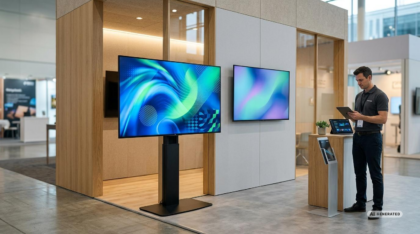
TV/Display Rentals for Trade Show Booths & Events: Resolution, Mounts/Stands, Setup & Data Protection
TV and Display Rentals for Trade Show Booths and Events: Tips on resolution, mounts, stands,
Aug
Guide
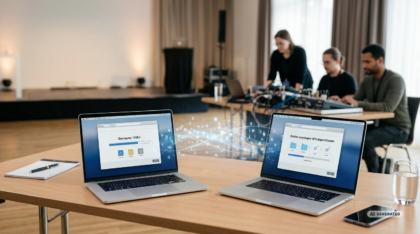
Transfer Data Quickly Between PCs Without a USB Drive: Simple Methods for Event Teams
Transfer data quickly between PCs without a USB drive: simple, secure methods for event teams—from
Aug

Technology Trends
EUDI Wallet & Digital Identities: Potential Applications for Check-In, Access Control, and Verification at Events
EUDI Wallet at Events: Digital identities for fast check-in, secure access control, and reliable verification.
Aug
Sustainability
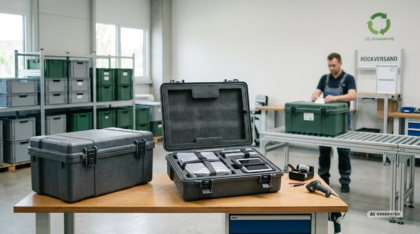
Making Packaging & Logistics Sustainable: Reusable Shipping Containers, Return Shipping Processes, and CO2 Reduction
📦 Making Packaging & Logistics Sustainable: Reusable shipping boxes, efficient return processes, and lower CO₂
Aug

Technology Trends
5G & Alternative Event Internet: Wi-Fi/5G Setup, VoWiFi, and Stratospheric Internet—What’s Realistic?
A Look at Internet for Events in 2026: 5G, Wi-Fi Setup, VoWiFi, and Stratospheric Internet.
Jul
Guide
Secure Wi-Fi on the Go & at Events: Which Smartphone/Hotspot Features You Should Disable and Why
Secure Wi-Fi on the Go & at Events: These Smartphone & Hotspot Features You Should
Jul