





Technology Trends
VR in the classroom: How rented virtual reality hardware is revolutionizing learning
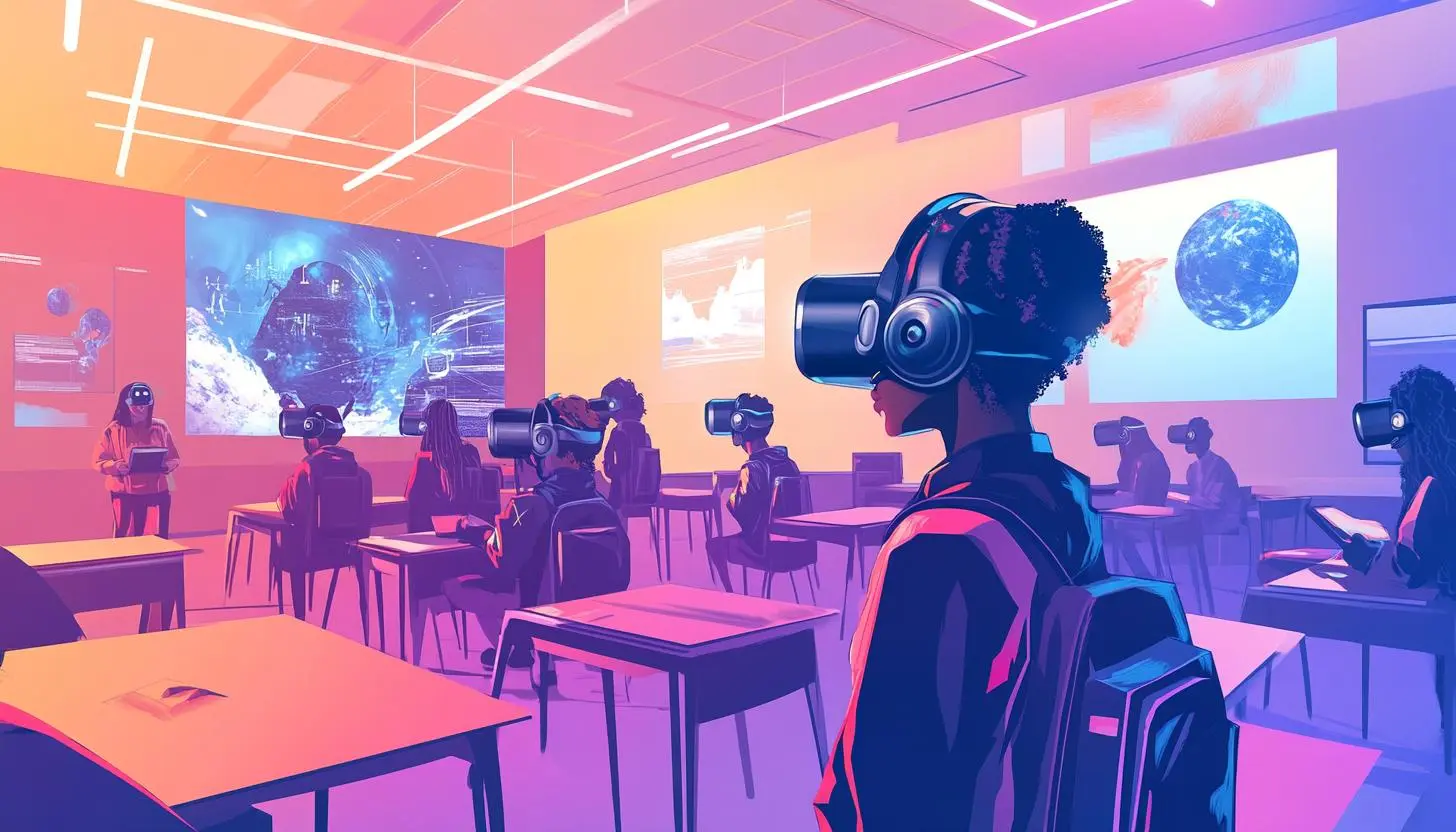
VR in the classroom: the future of digital learning
Virtual reality (VR) is increasingly revolutionizing the way knowledge is conveyed. In education in particular, this technology offers fascinating opportunities to make lessons more exciting and interactive. In this article, we take an in-depth look at how VR can be used in the classroom, the benefits it offers and the challenges it poses.
What is VR and how is it used in the classroom?
Virtual reality is a technology that allows users to experience a computer-generated environment with the help of special VR glasses and applications. Instead of just discussing subject matter in theory, students can immerse themselves in a virtual world to make abstract topics more tangible. VR is already being used successfully in subjects such as biology, history and physics.
- Biology: virtual tours through the human body, interactive experiments
- History: time travel to different eras, e.g. a visit to ancient Rome
- Physics: Visualization of complex physical theories, atomic structures
- Geography: Virtual explorations of foreign countries or outer space
Advantages of VR in the classroom
The use of VR technology offers a number of advantages for pupils, teachers and schools:
| Advantage | Description |
|---|---|
| Increased attention | Interactive learning methods increase students’ concentration and motivation. |
| Better knowledge transfer | Complex content can be better understood through visualization. |
| Individual learning opportunities | Adapted learning environments enable pupils to learn in a self-determined way. |
| Promoting teamwork | Students can work and learn together in virtual classrooms. |
| Safe learning | Experiments can be carried out risk-free in virtual space. |
Challenges and possible solutions
Although VR offers great potential, there are also some challenges that need to be considered:
Costs for the purchase
VR goggles, software and hardware can be expensive. Schools with limited budgets may find it difficult to implement this technology across the board. One solution would be to use cheaper VR goggles in conjunction with smartphones or to work with technology partners.
Teaching staff need training
Teachers need to be trained in the use of VR technologies in order to design meaningful lessons. Further education and practical training are essential in order to use the technology effectively.
Technical challenges
VR requires powerful hardware and a stable internet connection. Schools need to invest in an appropriate IT infrastructure or check existing devices for compatibility.
Examples of successful VR projects at schools
Some schools are already successfully using VR technologies in their lessons:
- The Virtual Human Project: Students can explore the human body and view organs in 3D.
- Google Expeditions: Virtual trips to historical sites or geographically distant places.
- Labster: An interactive VR platform for scientific experiments.
The future of VR in the classroom
The further development of virtual reality could change the education sector in the long term. Work is already underway on new technologies that will make VR even more immersive and accessible. Future trends could include AI-supported VR learning environments or the integration of augmented reality (AR), for example.
FAQ – Frequently asked questions about VR in the classroom
Which VR glasses are suitable for schools?
Beginner-friendly models such as the Meta Quest 2 or Pico 4 offer good value for money and are suitable for use in the classroom.
Is VR only suitable for STEM subjects?
No, VR can be used in many subjects, including history, art and languages.
How can schools finance VR?
Funding programs, cooperations with companies or crowdfunding can help to overcome the financial hurdle.
Conclusion
Virtual reality has the potential to take learning to a whole new level. The technology not only increases student motivation, but also helps to make complex content easier to understand. Despite the challenges, schools should seize the opportunity to integrate VR into the classroom to promote modern and interactive learning methods.
Read more - You may also be interested in
Would you like to delve deeper into the topic or discover similar content? Below, we have compiled three additional articles for you that are thematically related to this article. These may also be relevant and interesting for your company.

Leasing Solutions for Businesses
Rental vs. Buying Trade Show and Event Hardware: Costs, Flexibility, and Typical Setups for Businesses
Rental of trade show and event equipment instead of buying it: Cut costs, stay flexible,
Sep

Leasing Solutions for Businesses
Bring-Your-Own-Device vs. Rented Devices: When Each Strategy Is Worth It for Doctoral Programs
BYOD or Rented Devices? 📱 Find out which strategy is best for promotions in 2026—considering
Aug
Leasing Solutions for Businesses
TV/Display Rentals for Trade Show Booths & Events: Resolution, Mounts/Stands, Setup & Data Protection
TV and Display Rentals for Trade Show Booths and Events: Tips on resolution, mounts, stands,
Aug
Guide
Transfer Data Quickly Between PCs Without a USB Drive: Simple Methods for Event Teams
Transfer data quickly between PCs without a USB drive: simple, secure methods for event teams—from
Aug

Technology Trends
EUDI Wallet & Digital Identities: Potential Applications for Check-In, Access Control, and Verification at Events
EUDI Wallet at Events: Digital identities for fast check-in, secure access control, and reliable verification.
Aug
Sustainability
Making Packaging & Logistics Sustainable: Reusable Shipping Containers, Return Shipping Processes, and CO2 Reduction
📦 Making Packaging & Logistics Sustainable: Reusable shipping boxes, efficient return processes, and lower CO₂
Aug

Technology Trends
5G & Alternative Event Internet: Wi-Fi/5G Setup, VoWiFi, and Stratospheric Internet—What’s Realistic?
A Look at Internet for Events in 2026: 5G, Wi-Fi Setup, VoWiFi, and Stratospheric Internet.
Jul
Guide
Secure Wi-Fi on the Go & at Events: Which Smartphone/Hotspot Features You Should Disable and Why
Secure Wi-Fi on the Go & at Events: These Smartphone & Hotspot Features You Should
Jul